Maria Callas’s performance of Puccini’s Vissi d’arte remains one of the most haunting intersections of art and life in modern music. Standing under the glare of the stage lights, she did not simply sing Tosca’s lament — she lived it. Her voice quivered with despair, then soared with devotion, carrying every listener into the fragile space where prayer meets confession. The aria’s famous words — “I lived for art, I lived for love” — seemed to belong as much to Callas herself as to Puccini’s heroine, echoing her fate with unbearable precision.
Audiences who witnessed it swore they were no longer hearing a character; they were hearing Callas. Each syllable sounded like a wound opening, each phrase an intimate revelation that blurred the line between performance and life. It was as if she were laying her soul bare, forcing the crowd to see not a diva wrapped in gowns and glory, but a woman whose devotion to love and art had cost her everything.
Critics whispered afterward that she was not acting — she was bleeding. The ovations thundered, but they carried a strange weight, as though the audience feared they had witnessed something too private, too real. Even decades later, the recordings still burn with the same intensity, proof that Callas’s art was never detached from her reality. Her tragedies offstage — her sacrifices, her betrayals, her loneliness — all seemed to gather in that single aria, transfigured into music.
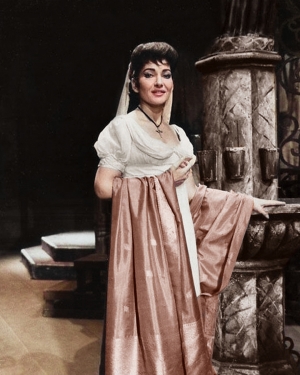
In Vissi d’arte, Callas did what no other soprano has matched: she erased the boundary between Tosca’s torment and her own. She became the prayer itself, the voice of every artist who has ever given everything and received too little in return. In doing so, she turned her sorrow into immortality, ensuring that when we listen to Puccini’s aria today, we do not just hear Tosca — we hear Maria Callas, forever confessing her life in song.