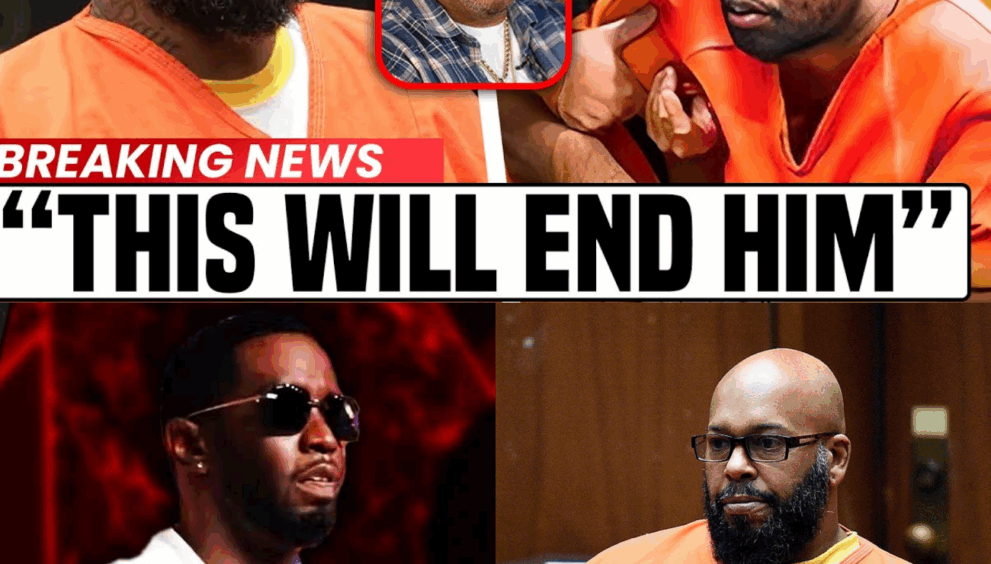
Suge Knight Backs Gene Deal Making Shocking Claims on P. Diddy from Prison
The world of hip-hop has never been short of controversy, but every so often, a revelation rocks the culture in unexpected ways. This week, headlines blared with news that Marion “Suge” Knight — the notorious former Death Row Records CEO currently serving a lengthy prison sentence — has lent vocal support to former Bad Boy security officer Gene Deal’s explosive allegations against Sean “P. Diddy” Combs.
Knight, once one of the most feared and influential figures in rap, is no stranger to controversy or to feuding with industry rivals. Even behind bars, his name continues to command attention. Gene Deal, meanwhile, served as a close confidante and bodyguard in Diddy’s inner circle during the height of Bad Boy Records’ run in the late ’90s and early 2000s. In recent years, Deal has become increasingly candid in interviews, sharing insider stories and sometimes making damning allegations about the people he once worked for—none more controversial than his recent claims about Combs.
Let’s break down what’s happening, why it matters, and what it could mean for the future of hip-hop’s biggest legacy stories.

The Knights and the Kingpins: Two Titans, One Fateful Night
For decades, hip-hop devotees and casual observers alike have pondered the 1990s “East Coast vs. West Coast” rap war. This feud became personified in the tragic deaths of Tupac Shakur and Christopher “Notorious B.I.G.” Wallace. Suge Knight has remained a shadowy, polarizing figure in these swirling rumors — even as he’s maintained a code of silence about the specifics of those years.
Gene Deal was there, too, as a background sentinel tasked with keeping Bad Boy’s star assets safe. His newly amplified voice is timed to coincide with renewed scrutiny on the 1996 and 1997 murders of Tupac and Biggie, respectively. Recent documentaries and revived police investigations have captured the public’s attention once again.
Gene Deal’s Explosive Allegations
Deal has claimed, in numerous interviews and podcasts, that the truth about the killings and the dark side of the ’90s rap industry has been kept under wraps for too long. But it’s his allegations regarding P. Diddy’s purported behavior and business dealings that have shocked audiences.
While many remember Diddy as the party-loving mogul behind Bad Boy Records, Deal’s claims paint a different picture—one of paranoia, ruthless ambition, and, at times, manipulation to protect his position and fortune. Deal recently suggested that figures within Diddy’s camp may have had advance notice of threats to Biggie’s life and that there was a pervasive climate of secrecy and fear.
Most dramatically, Deal alleges that information about those infamous nights in Las Vegas and Los Angeles was suppressed from both police and the public—suggesting a deliberate cover-up.
Suge Knight’s Surprising Endorsement
Given his own history and his well-documented personal animosity with Diddy, Suge Knight’s endorsement of Gene Deal’s claims has amplified their impact. In a recent phone interview from prison, Knight stated, “Gene Deal’s finally speaking the truth. People been hiding behind money, power, and the media for too long. The real story about what happened to Biggie, about what Diddy did, is going to come out.”
Knight’s support of Deal is significant. For years, many dismissed Deal’s recollections as bitter grumblings of a former employee. But Knight remains a pivotal figure of hip-hop history. By backing Deal’s claims, he gives them new legitimacy, especially among hip-hop aficionados and investigators who have long suspected there’s more to the story than the official accounts.

A Battle for Legacy: Why Now?
So why are these revelations (and endorsements) emerging in 2024, nearly 30 years after the events in question? The answer lies in the passage of time, shifting alliances, and an evolving culture of transparency in the era of social media.
With Suge Knight incarcerated, he has little to lose and perhaps a final shot at shaping or reshaping his own legacy. For Gene Deal, the emergence of “tell-all” podcasts and YouTube channels has offered outlets unafraid to tackle hip-hop’s darker history. Meanwhile, the general public has become more suspicious of long-standing narratives, and new revelations have gained traction.
Diddy himself has recently faced a cascade of lawsuits and renewed scrutiny into his business dealings, personal relationships, and alleged criminal activities. The climate is ripe for re-examining the past, and Knight’s and Deal’s statements fall on particularly fertile ground.
The Potential Fallout
To some, the situation reads like a calculated attempt at character assassination—a way for Knight to settle old scores from behind bars and for Deal to burnish his own reputation as an “insider” truth-teller. To others, it’s a long-overdue reckoning with an ugly chapter in hip-hop’s history.
If further substantiated, Deal’s claims—especially with Knight’s backing—could prompt re-opened police investigations, renewed media scrutiny, and a seismic reappraisal of Diddy’s place in hip-hop’s pantheon. The legacy of Tupac and Biggie, already endlessly mythologized, may take new shape, influenced by voices long kept quiet.
The Bigger Picture: Hip-Hop’s Unfinished Business
The Knight-Deal saga is more than a battle of personalities. It’s a meditation on the specter of unresolved trauma, the power dynamics at play in the music industry, and the search for truth amid proliferating narratives. In the process, fans and critics must wrestle with uncomfortable questions: Can beloved icons be villains in their own stories? How much complicity do we harbor, as consumers, when we turn away from hard truths? And can the culture ever truly heal without full transparency?
History suggests that, in hip-hop as in life, every revelation prompts only more questions. Suge Knight’s support for Gene Deal’s claims may just be the latest twist in a tale with no easy answers.
One thing is certain: As old wounds are reopened, the world is watching—and the final verdict on hip-hop’s most notorious mysteries is far from written.