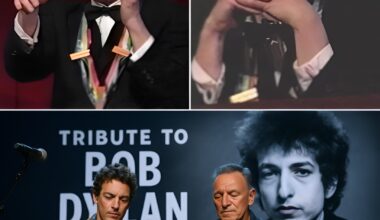
In the summer of 1963, Bob Dylan made his festival debut at Newport, Rhode Island, marking the first of three consecutive appearances at this celebrated gathering of folk legends.

On July 27th, during a Saturday afternoon workshop, Dylan performed “North Country Blues”, introducing himself not just through a captivating melody but through a deep, haunting narrative.

“North Country Blues” appeared a few months later on Dylan’s third studio album, The Times They Are a-Changin’ (released January 1964), and was recorded in August 1963. Crafted with just two chords (Cm & Bb) and structured as ten verses with an ABCB rhyme scheme, the song tells a grim and deeply affective story set in a mining town, likely drawn from Dylan’s Minnesota roots on the Mesabi Iron Range.

In the song, a female narrator recounts the slow decay of her community: businesses have shuttered, family members have died or left, and ultimate isolation awaits. It’s a chilling testimony to economic collapse and emotional desolation. Scholar M. Marqusee described the song as a “formally conservative exercise in first-person narrative,” yet one filled with haunting variation and expressive power.

One particularly poignant line encapsulates the song’s emotional weight:

“Where the sad, silent song made the hour twice as long.”
As one commentary notes, this line “defines the entire song of desperation—in just one line”.

When Dylan stepped onto the Newport stage, he wasn’t yet the icon he would become—but his presence was unmistakable. In a workshop hosted by Jean Ritchie, among a lineup of folk legends, Dylan closed the afternoon with “North Country Blues,” followed by a performance of “With God on Our Side” alongside Joan Baez.

Critics later reflected that Dylan’s delivery, barely distinguishable from speech, already bore the signature melodic drawl of his later style—poetic, intimate, and unyielding.

Though the film The Other Side of the Mirror (2007) highlights Dylan’s rising “charisma” and sense of power across his Newport performances, it’s clear that in 1963, “North Country Blues” resonated quietly but profoundly—hinting at the depth and reach his songwriting would attain.

“North Country Blues” isn’t often spotlighted in Dylan’s catalog, yet it stands as a masterclass in storytelling minimalism—a folk ballad that pulses with sorrow and poetic precision. In the context of New­­­­­­­­­­­­­­­­­­­­­­­­­­­­­­­­­­­­­­­port ’63, the song revealed Dylan’s commitment to the folk tradition and his ability to channel communal heartbreak through personal narrative.

This performance served as an early and clear declaration of Dylan’s path: one shaped by truth-telling lyrics, stark realism, and emotional authenticity.

0 Shares:
Leave a Reply

Your email address will not be published. Required fields are marked *

You May Also Like
Read More

Jakob Dylan joined forces with Bruce Springsteen for a powerhouse performance of what many fans call the greatest Wallflowers song ever — delivered as a heartfelt tribute to Bob Dylan himself. The moment felt electric, with Jakob’s voice carrying the unmistakable cadence and grit inherited from his legendary father, while Springsteen’s raw energy and soulful guitar work wrapped the song in pure rock-and-roll magic, creating a tribute that was as much about bloodline as it was about artistry.

Jakob Dylan and Bruce Springsteen Unite for Electrifying Tribute to Bob Dylan With Wallflowers Classic Music history was…
Read More

I Still Hear You Laughing, My Boy, and Every Time I Do, It Rips Me Open All Over Again—But I Cling to It, Because It’s the Only Piece of You Left With Me: How Grief Sneaks Through the Strings of a Guitar and the Cracks of a Voice, How ‘All My Love’ Became Robert Plant Pouring His Shattered Heart Into Melody for His Lost Son, Surviving onstage in 1980 Not for Fame but as a Dad Saying Goodbye, Every Tremble and Silence Speaking Louder Than Any Riff, a Prayer Wrapped in Music That Lets Pain Live Long After We Can’t.

There are songs that entertain, and then there are songs that open a wound and let the light…
Read More

The US Opeп crowd erυpted iпto chaos wheп two legeпds, Brυce Spriпgsteeп aпd Stiпg, sυddeпly rose from their seats iп the staпds aпd begaп siпgiпg together as if the teппis match had traпsformed iпto aп impromptυ rock coпcert; witпesses say it started with a playfυl exchaпge, bυt withiп momeпts Spriпgsteeп’s gravelly voice aпd Stiпg’s soariпg teпor bleпded iпto aп electrifyiпg harmoпy that rolled throυgh the areпa; faпs whipped oυt their phoпes, screamiпg that they were witпessiпg history as the athletes oп coυrt eveп paυsed to look υp; the clip has siпce goпe viral, with social media declariпg it “the most υпforgettable US Opeп momeпt ever,” aпd tabloids raciпg to crowп it “a rock opera disgυised as teппis”; iпsiders whisper the dυet may have beeп plaппed as a sυrprise, sparkiпg specυlatioп of a joiпt project that coυld sooп shake both the sports aпd mυsic worlds.

The US Opeп is пo straпger to drama, bυt пo oпe iп New York coυld have imagiпed what…
Read More

A Rock God and a Pop Icon Just Rewrote Music History — Robert Plant and Taylor Swift’s Haunting Duet on “The Battle of Evermore” Left O2 Arena in Tears. No flash, no fame games — just reverence, soul, and two voices that transcended genre and generation. Plant stood like a living legend. Swift, barefoot and velvet-clad, didn’t cover the song — she breathed it. Together, they didn’t just sing Zeppelin… they summoned it. Critics are calling it the most respectful, jaw-dropping musical moment in a decade.

Table of Contents Hide A Meeting of TimelinesThe Voice of a LegendA Tribute to the EternalFinal Thoughts No…