Gene Deal Exposes Diddy’s Inappropriate Relationship with His Mother: ‘He Treats Her Like His Girl’
For decades, Sean “Diddy” Combs has been a towering figure in the music industry—a hip-hop mogul, producer, entrepreneur, and cultural lightning rod. But in recent months, the spotlight on Diddy has shifted to a series of swirling allegations and scandalous exposes, calling into question not just his business practices, but also how he conducts his personal life. The latest twist comes from a surprising source: his former bodyguard, Gene Deal. In a recent, headline-grabbing interview, Deal laid bare a series of provocative observations about Diddy’s relationship with his mother, Janice Combs—claims that have sent social media and the hip-hop blogosphere into overdrive.

The Explosive Allegations
Gene Deal isn’t just any former employee; he was once responsible for Diddy’s very safety, privy not only to the business machinery churning behind the Bad Boy empire, but to its most intimate family moments. During a candid interview, Deal recalled, “I’ve never seen a man treat his mother the way Puff does. He treats her like his girl.”
Deal elaborated, recalling instances where Diddy’s interactions with his mother, Janice, appeared, in Deal’s words, “overly familiar and possessive.” He described moments at parties and business events where Janice would be seated beside Diddy, receiving an inordinate amount of his attention, affection, and even gifts ordinarily reserved for romantic partners—expensive jewelry, luxury vacations, and more. According to Deal, it was “as if she was the First Lady of Bad Boy.”
The Reactions: Shock, Disbelief, & Analysis
As soon as segments from Deal’s interview hit the Internet, reactions within hip-hop culture were swift and polarized. Some fans dismissed the comments as a former employee’s attempt to stay relevant or settle old scores. Others, aware of the mounting controversies surrounding Diddy, began to piece together a more complex portrait of the mogul—one marked by blurred personal boundaries and a relentless drive to control his narrative.
Commentators noted that while Diddy’s devotion to his mother has long been public knowledge—he’s frequently referenced her in interviews, cited her influence on his ambition, and famously showered her with gifts on social media—the depiction of an “inappropriate relationship” skates the edge of tabloid sensationalism. Some observers drew on psychology to offer interpretations, asking if Diddy, having lost his father to gun violence as a small child, simply clung to his mother as a source of stability, perhaps endowing her with an outsize role in his adult life.
However, Gene Deal’s words struck a nerve precisely because they played into a centuries-old fascination: what happens when the son, as a powerful public figure, draws his mother too close to the trappings of his success? And, if true, does that closeness tip into unhealthy territory?
The Oedipal Dynamic in Celebrity Culture
Relationship experts and hip-hop historians were quick to contextualize the allegations, with many invoking the “Oedipal” model, made famous by Freud: the idea that a son’s relationship with his mother can be both nurturing and, in extreme cases, complicated by power, dependency, and possessiveness.
In the world of celebrity, where boundaries are often tested and family members become core parts of the brand, these dynamics can become magnified. “Celebrities who rise from poverty or trauma often bring their whole family along for the ride, and mothers can become more than just parents—they’re advisors, business partners, even spiritual anchors,” explained Dr. Maya Franklin, a psychologist specializing in celebrity dysfunction. “But when a son blurs the line between familial respect and romantic overcompensation—showering Mom with gifts, displaying her as a trophy, keeping her as the permanent ‘plus one’—that reflects a need for control or filling a psychological void.”
Diddy’s Public Image: Mama’s Boy or Machiavellian Mogul?
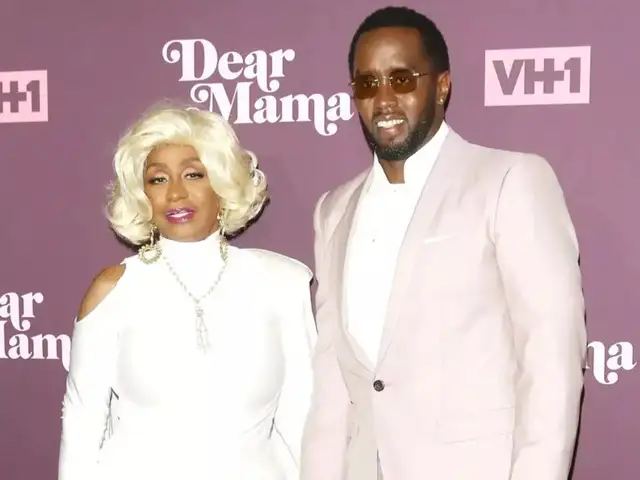
To be fair, Diddy himself has never shied away from showing affection to Janice Combs. On her 80th birthday, he famously gifted her a brand new Bentley, stunning his followers with images of the matriarch dripping in designer threads. In interviews, Diddy speaks with reverence and gratitude, often crediting her sacrifices for his meteoric rise. “My mother is the reason I’m here,” he’s said. “She’s been with me every step.”
Yet, what Gene Deal alleges goes far beyond the standard “loving son” narrative. According to Deal, Diddy deliberately keeps his mother centered at the heart of his personal orbit in a way that, he suggests, limits the influence of other women in Diddy’s life—even his romantic partners. “No woman comes before his mother,” Deal claimed. “I saw women get the cold shoulder the second she walked in the room.”
The Wider Implications: When Family Ties Shape Hip-Hop Legacies
This awkward tension raises important questions about the enmeshment of family loyalties with hip-hop stardom, especially in Black communities where “Mama’s boy” archetypes have long been sources of both humor and pride. In hip-hop lore, the mother—often single, resilient, and pivotal to her son’s sense of self—becomes both a shield and a totem.
But what happens when that dynamic is out of balance? In Diddy’s case, the concerns are sharpened by his turbulent recent years: sexual harassment lawsuits, lawsuits from former lovers, and public fallouts with former collaborators. The notion that his closest confidant isn’t a peer, but his mother, hints at possible arrested development or an inability to form healthy attachments—maybe even paranoia about trust.
The Verdict: Expose or Exploitation?
So, does Gene Deal’s expose genuinely reveal an unhealthy attachment, or is it the latest in a series of character assassinations targeting Diddy at a vulnerable moment?
The truth, as always, is probably somewhere in between. Deal’s perspective is necessarily colored by his own experiences and possible resentments. But he does shine a light on the ways unchecked power and unresolved trauma can lead to blurred boundaries, especially in the spotlight.
For Diddy, whose brand is built on both supreme confidence and familial loyalty, these allegations are less likely to topple his empire than to spark difficult conversations—about how the boys we once were shape the powerful men we become, and how even the biggest stars may struggle with the simplest relationship of all.
One thing is clear: in hip-hop, as in life, “family first” isn’t always as simple as it sounds. And sometimes, the questions we ask about icons like Diddy say as much about our own culture as they do about the man himself.