Two D12 albums hit double platinum in the early 2000s. “Devil’s Night” and “D12 World” were both hot albums, as Eminem was one of the most popular MCs in the world at the time; D12 was his crew.
Everything started at Detroit’s Hip Hop Shop. On a chilly February night in ’96, Marshall Mathers jumped into battle with Kuniva while Proof looked on. That raw showdown sparked what would become a hip-hop force.
“We all knew each other growing up in Detroit. I used to sneak Em into my school lunchroom just so he could battle,” Proof wrote on the D12 website. “Later, when we started battling once a month at Maurice Malone’s Hip Hop Shop, everybody had a crew. So, we decided to form our own.”
Taking their name from “The Dirty Dozen,” a tough 1967 film, Proof and Bizarre started small. Soon, they brought in battle-tested talent from Detroit’s rap scene. Each rapper created an alter ego, turning six MCs into twelve wild characters.
In ’99, tragedy hit when Bugz died. Swifty McVay joined up, keeping the group’s energy alive. Five years later, they grabbed the MTV Europe Music Award for Best Hip-Hop Act.
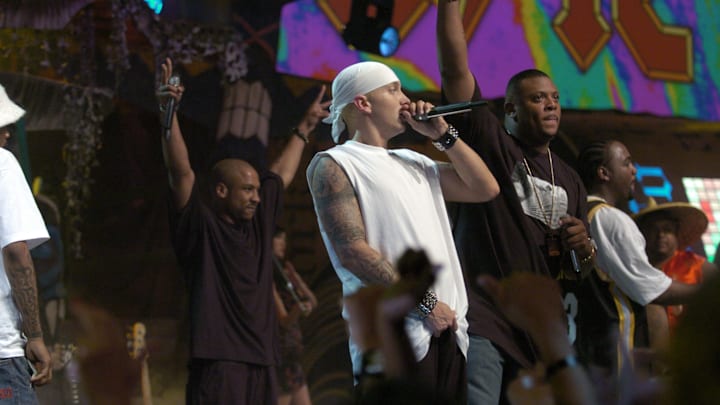
Five songs made them famous: “Fight Music” rocked speakers, “Purple Pills” got people moving, “My Band” had everyone singing, while “S— on You” and “How Come” showed their raw talent.
Before the fame, they owned Detroit’s underground. Every week, they’d destroy opponents in freestyle battles, earning street cred that no money could touch.
When Proof died in 2006, the group started to fade. Twelve years later, Mathers dropped “Stepping Stone,” officially ending D12’s journey.
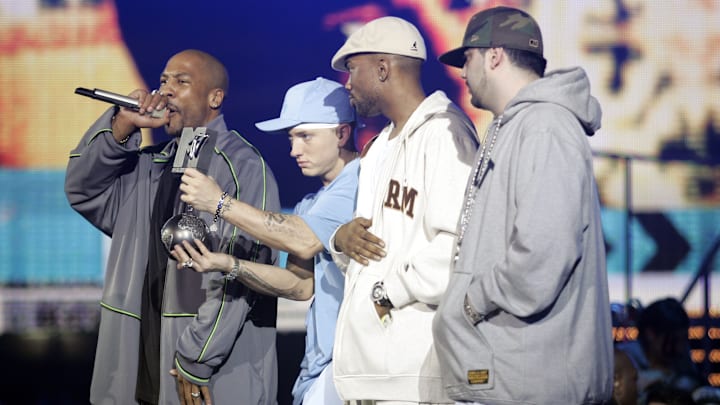
Detroit’s mid-90s battle scene created more than just hits – it made a template. Those street-tough rap battles still influence hip-hop’s newcomers today