Music fans across the world lost a quiet but monumental figure this Wednesday. Tzruya “Suki” Lahav passed away in Jerusalem at the age of 74 following a battle with cancer, a heartbreaking update shared by her son, Yonatan Lahav, on Facebook. While she built an incredible legacy as a poet and songwriter in Israel, American rock fans know her best for her brief but unforgettable chapter touring and recording with Bruce Springsteen and the E Street Band during the 1970s.
The Sound of an Era
If you have ever listened to the end of the Born to Run album, you know her work intimately. Lahav provided the beautiful, soaring violin intro that kicks off the beloved track “Jungleland.”
Her contributions did not stop there. She also provided uncredited background vocals on earlier tracks from The Wild, the Innocent and the E Street Shuffle, including “Incident on 57th Street” and “4th of July, Asbury Park (Sandy).” The story behind “Sandy” is particularly charming. She was reportedly pulled into the studio to act as a one-woman choir when a local children’s group simply failed to show up for the session.
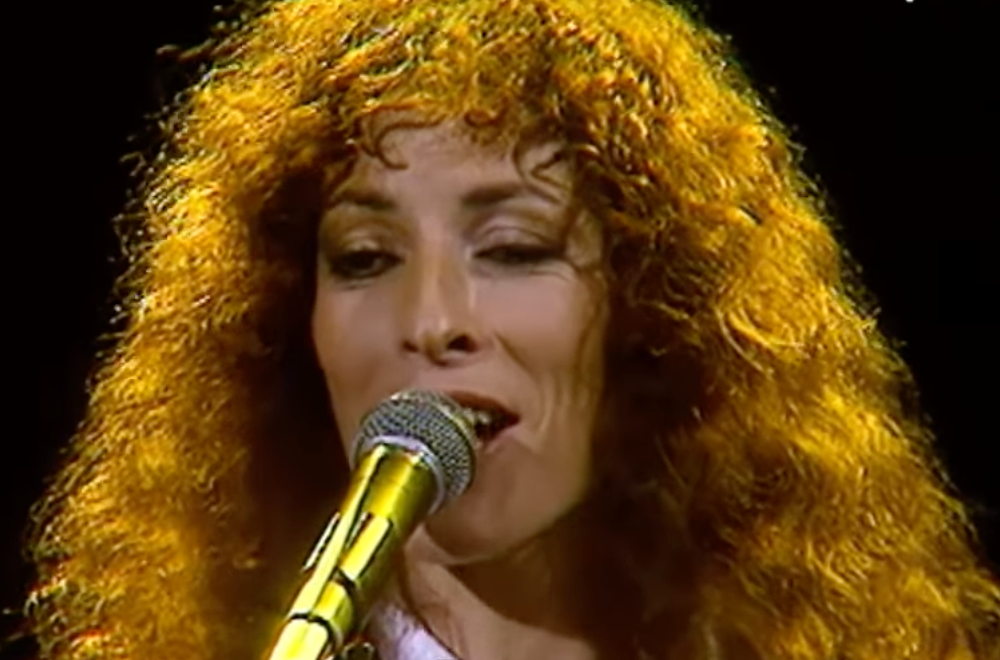
Before Springsteen reached global superstardom, Lahav joined the band on the road. According to the Brucebase website, she played violin for 38 concerts. Her run started in October 1974 at Avery Fisher Hall in New York and wrapped up in March 1975 with a two-night stand at DAR Constitution Hall in Washington, D.C. During those shows, she became famous among diehard fans for her prominent violin work on a cover of Bob Dylan’s “I Want You,” a performance that remains a heavily traded bootleg favorite today.
E Street Lore and a New Direction
Her brief time in the Springsteen universe created plenty of mythology. Author Clinton Heylin argued in his book E Street Shuffle that Lahav actually inspired the classic song “She’s the One,” though Springsteen has never confirmed this. Former manager Mike Appel wrote in his memoir that there was palpable chemistry between the singer and the violinist on stage. Lahav, however, firmly dismissed those rumors in later interviews, calling them nothing more than old wives’ tales.
Her connection to the band came largely through her husband at the time, Louis Lahav, who worked as a sound engineer for Springsteen at 914 Sound Studios in New York. After Suki left the band in early 1975, the couple relocated to Israel and eventually divorced in 1977. She later explained that their departure was tied to the fallout between Springsteen and Appel. Because they considered themselves part of Appel’s circle, they felt it was time to move on.
While there are very few photos or videos of her time with the band online, fans still obsess over rare audio outtakes. One fascinating scrap is an abandoned alternate ending to “Jungleland” that features Lahav singing an operatic solo.
A Giant in Israel
While American fans focus on her rock and roll days, her time with the E Street Band is just a tiny footnote in her home country. Her obituary on i24News called her a central figure in Israeli music and one of the nation’s most influential poets. She built a massive creative career that earned her the prestigious ACUM Lifetime Achievement Award and the Erik Einstein Prize.
Her impressive list of accomplishments in Israel includes:
- Hit Songwriting: She penned lyrics for major Israeli artists including Tamouz, Rita, Yehudit Ravitz, Rami Kleinstein, and Yehuda Poliker.
- Literary Fiction: She authored successful novels like Andre’s Wooden Clogs and The Swamp Queen Does the Tango.
- Screenwriting: She expanded her storytelling to film with the screenplay Kesher Dam.
From the Kibbutz to the Stadium
Her journey from a young woman in Israel to an American rock stage is incredibly unique. A 2007 profile in the Jerusalem Post described her during the Springsteen era as a young girl in a flowing white dress, straight off Kibbutz Ayelet Hashahar and barely out of the military. She joked to the paper about the surreal leap from playing kibbutz harvest music to rocking out with Bruce.
As the years went on, Lahav actually stopped playing the violin altogether. She admitted she never felt like a true expert and found it too difficult to maintain the required skill level to play casually. She also openly preferred the raw, early music of Springsteen over the massive arena hits he produced after she left his orbit.
When a reporter asked if she still listened to the classic albums she helped create, they noted the genuine joy in her voice as she said yes. She perfectly summed up her wild ride in American music by noting it was not the main thing in her life, but it was a part of her that would never fade.