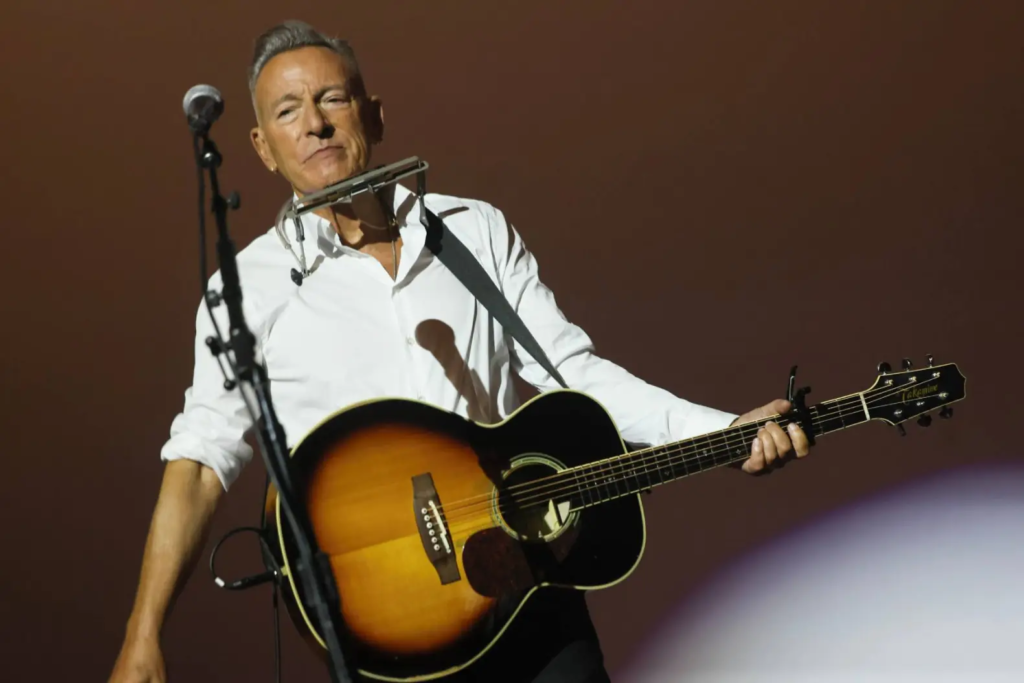
The dim lights of Minneapolis’ First Avenue flickered like a heartbeat on edge. This wasn’t just any gig at the club immortalized in Purple Rain—it was ground zero for raw American reckoning. Bruce Springsteen, the 20-time Grammy titan whose voice has narrated working-class anthems for decades, stepped to the mic with something unprecedented: the world premiere of “Streets of Minneapolis,” a protest scorcher penned in the heat of heartbreak.
Picture the scene. Just days after the tragic deaths of Alex Pretti and Renee Good in clashes with ICE, Springsteen had rushed this track into existence. No polish, no delay—pure gut response to streets still echoing with loss. The Boss, ever the poet of the forgotten, poured their stories into lyrics that name names, call out power, and refuse to flinch. “We’ll remember the names of those who died,” he belts, pinning the pain squarely on Minneapolis soil, a deliberate echo of his Oscar-winning Streets of Philadelphia.
The crowd, a mix of diehards and locals carrying the city’s fresh wounds, hung on every word. But before the first chord, Springsteen paused, eyes scanning the packed room. “This is for the people of Minneapolis, Minnesota, and the people of our good country, the United States of America,” he said, voice steady as steel. The dedication landed like a vow, transforming the venue into a sanctuary of solidarity.
Enter Tom Morello, Rage Against the Machine shredder and fellow rebel, who bounded onstage to roar: “My good friend and fellow freedom fighter!” The place detonated—cheers crashing like thunder. Morello didn’t just hype; he shared the backstory. When Springsteen first played him the demo, Morello’s advice cut sharp: “Nuance is nice, but sometimes you just have to hit them hard.” Springsteen grinned, nodding—then unleashed hell.
From the opening strum, the energy was visceral. Backed by his E Street Band faithful, The Boss delivered with the intensity of a man who’s seen too much. Lines jabbing at “King Trump’s private army from the DHS,” Stephen Miller’s spin, and Kristi Noem’s rhetoric flew like arrows, framing Good and Pretti not as “domestic terrorists,” but as innocents the system wants erased. “Don’t believe your eyes,” he warns, flipping the narrative on its head. At 75, Springsteen wasn’t preaching from a pedestal—he was testifying, witness to “state terror” as he later posted on Instagram, signing off with a stark “Stay free.”
The crowd’s reaction? Electric communion. Fists pumped, voices swelled in chorus, tears streaked faces amid the sweat. This wasn’t arena spectacle; it was intimate insurgency, the kind of live-wire moment that reminds why we chase music’s soul. Fans who’d streamed in from protests lingered, their grief transmuted into fuel. One local murmured to a neighbor, “He gets it—he sees us.”
Springsteen’s history arms this bold stroke. From backing Kamala Harris to branding Trump a “tyrant,” he’s no stranger to the fray. Trump once dismissed him as “overrated,” but tracks like this outlast barbs—they burrow, they rally, they endure. Unlike rally rants, songs slip past defenses, replayed in cars, shared in groups, internalized by souls far from politics.
As the final notes faded, First Avenue pulsed with possibility. Renee Good’s January 7 fall had sparked nationwide fury; Pretti’s followed in the flames. Springsteen didn’t solve it—he amplified it, risking fan divide for unfiltered truth. At this stage, with legacies locked, he’s chasing clarity over comfort.
That night etched “Streets of Minneapolis” into lore: a debut that hit hard, honored the lost, and dared us to listen. In rock’s rebel tradition, it’s a reminder—music doesn’t just sound the alarm; it shakes the foundations. Will it unite or divide? One thing’s certain: you can’t unhear those streets calling.