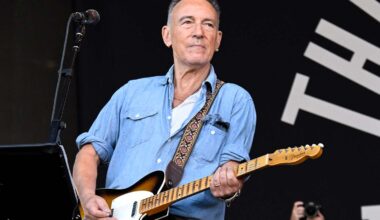
Picture a 15-year-old Bruce Springsteen parked in his car outside a New Jersey drive-in, 1965 sun dipping low. Radio crackles to life—”Like a Rolling Stone” by Bob Dylan bursts forth. That opening snare snaps like thunder, Dylan’s voice slicing through static. Bruce later called it a “bolt of lightning,” a revolutionary jolt revealing music’s untapped might.
Dylan’s lyrics, swagger, and untethered howl flipped the script: songs weren’t mere diversions—they could pierce personal, political, poetic veins. In that car, alone with the dial, Bruce grasped it all. He grabbed a guitar soon after, penning his first lines. “It kicked the door open,” he’d say, unlocking a universe that defined his path.
What gripped him? Dylan’s voice—imperfect by polished standards, yet brimming with raw truth and defiance. That unvarnished edge resonated, granting permission to wield his own timbre, flaws and all. No need for perfection; just stories from the gut, bold and unapologetic. “Like a Rolling Stone” whispered it was fine to stand apart, to voice the unrest, to pursue horizons beyond the ordinary.
Years on, meeting Dylan face-to-face, Bruce shared the debt: that single track reshaped his worldview. Beyond sound, it embodied liberty and guts—a template for rebels like him. Springsteen credits Dylan with paving rock’s meaningful lane, blueprint in hand.
Even now, decades deep, he spins it and reignites the teen blaze. Not just a track—a genesis, the alpha of his saga.