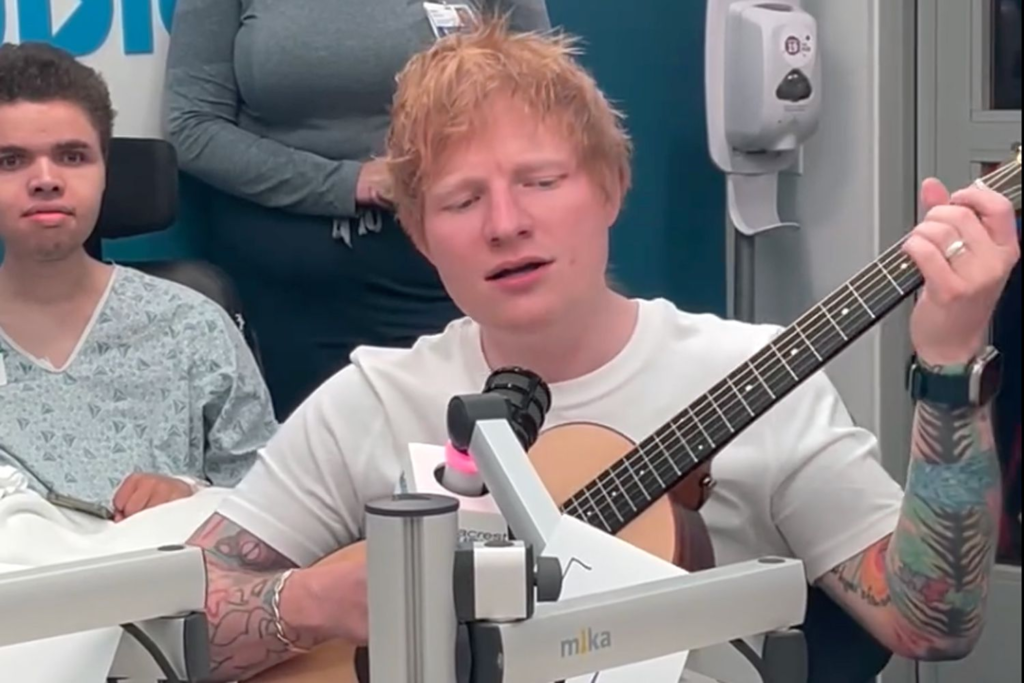
It wasn’t on a stadium stage or under blinding lights. It happened in the soft, fluorescent glow of the Women’s and Children’s Hospital in Adelaide, where global superstar Ed Sheeran walked in with a simple guitar in hand and a smile that felt less like a celebrity and more like a friend. On that Friday morning, hours before his sold‑out show at Adelaide Oval, he traded drum fills and crowd roar for IV poles and quiet corridors, turning the hospital’s atrium into an impromptu concert hall for his smallest, bravest audience.
Dressed in jeans and a blue T‑shirt, Sheeran stepped into the crowded space to a wave of gasps and scattered applause. For some of the children, many of them in the middle of long‑term treatment, it was the kind of moment that etches itself into memory: the day a pop star donned a hospital mask instead of a headset and sat down in the middle of their world. “I just wanted to stop by and play a few songs,” he said with a warm grin. “You guys are the real rock stars.”

He opened the mini‑set with his chart‑topping ballad “Perfect,” letting the familiar chords wash over the room, followed by “Castle on the Hill,” one of those songs that feels like coming home. Parents and nurses swayed, kids strained to sing along from their chairs, and the usual hospital hush softened into something gentler—a shared hum of voices, however small. Between songs, he chatted casually, asking about school, favorite toys, and even taking questions about life on tour. When asked about his favorite food, he shot back, “Still chicken nuggets,” with a half‑laugh, and when a young fan asked if he ever gets nervous, he didn’t deflect. “Always,” he said. “But you just have to remember—people want you to do well.”
One of the most tender parts of the visit came when Sheeran slowed the mood, dedicating a stripped‑back acoustic version of “Photograph” to the children in the wards who couldn’t make it to the atrium. Hospital staff streamed the performance into their rooms, piping the soft strums and gentle vocals through screens so every patient, no matter how unwell, could feel included. “This song is about holding on to love and memories,” he said softly. “Even when things are hard, those are what keep us going.” In that hospital, the line didn’t just sound like a lyric—it felt like a quiet promise.
Nurses and doctors later described the visit as “pure joy,” the kind of day that lifts the weight off an entire ward. “For our patients, many of whom spend weeks or months here, moments like this make all the difference,” hospital spokesperson Emily Carter told reporters afterward. “Ed’s kindness lit up the entire hospital.” Parents, too, stood near tears, watching their children’s faces light up with wonder. One mother, whose son has been battling leukemia, spoke through tears: “He made everyone forget the hospital walls for a while. It felt like hope walked in the door with a guitar.”
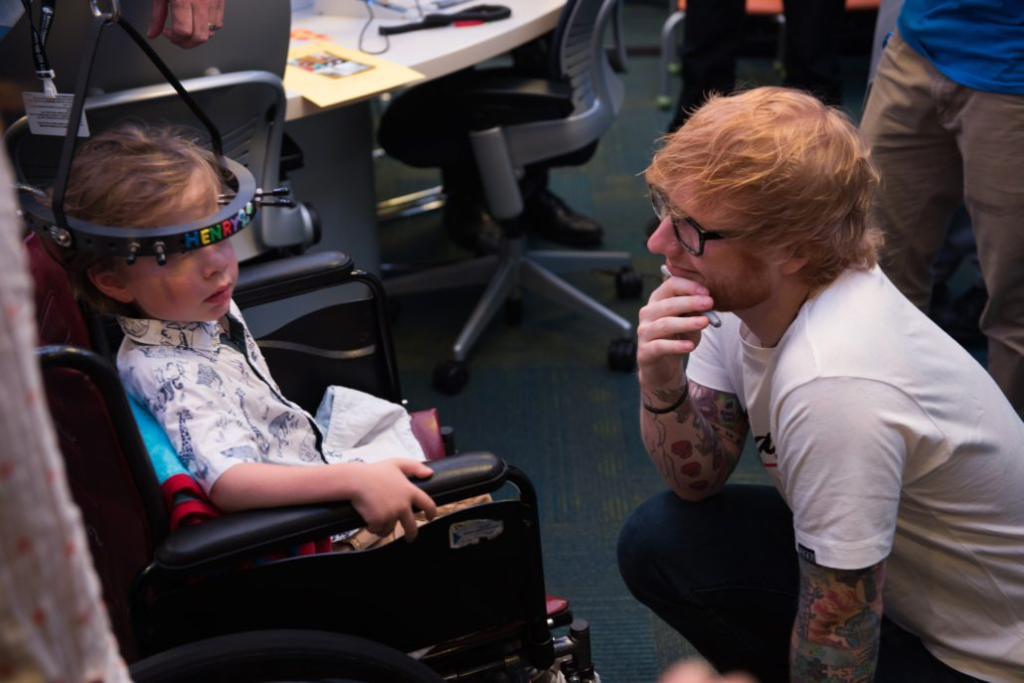
After the songs faded, Sheeran didn’t rush off. He stayed more than an hour, moving from bed to chair to playroom, signing autographs, taking selfies, and kneeling beside kids who had waited all day just to say hi. In one especially heartwarming exchange, he crouched next to a young girl in a wheelchair who had drawn him a picture. “Can I keep this?” he asked quietly. “I’m putting it on my tour bus.” The moment wasn’t staged for cameras; it played out like any real conversation between two people who just wanted to connect.
Later that evening, as he posted a photo from the visit to Instagram, he wrote: “Thank you to everyone at the Women’s and Children’s Hospital in Adelaide for having me. You’re all heroes. Keep smiling and singing.” Fans flooded the comments, describing the gesture as “the most Ed Sheeran thing ever” and calling it proof that fame hasn’t changed him—that he’s still the same kid from Suffolk who writes songs about feelings and says “hi” to the people who matter most.
That night, when Sheeran took the stage at Adelaide Oval to thunderous cheers from thousands, the crowd roared for the hits and the spectacle. But in the quiet corners of memory, many of those who’d been in the hospital or heard the story knew the truth: the most meaningful performance of the day had already happened under fluorescent lights, in a room where music met courage, and where one man with a guitar helped heal a little more than just egos—one small, human heart at a time.