There are certain songs that carry the weight of an entire culture on their shoulders. “Danny Boy” is one of them. For over a century, its haunting melody has served as the unofficial anthem of the Irish diaspora, echoing through quiet pubs and massive cathedrals alike. But when the lights dimmed at the latest Celtic Thunder showcase, the audience wasn’t just treated to a cover of a classic; they were invited to witness a resurrection.
The Power of the First Note
The transformation began long before the first lyric was even uttered. As the opening chords drifted through the venue, a rare kind of hush fell over the crowd—the kind of silence that only happens when five thousand people collectively decide to hold their breath. In an age of high-energy stage pyrotechnics and digital vocal processing, Celtic Thunder chose the bravest path possible: total vulnerability.
When the first voice broke the silence, it didn’t arrive with a roar. It arrived as a whisper, intimate and heavy with the storytelling tradition of the Emerald Isle. This is the hallmark of the Celtic Thunder experience—the understanding that “Danny Boy” isn’t just a song about parting; it is a ghost story, a prayer, and a promise all wrapped into one.
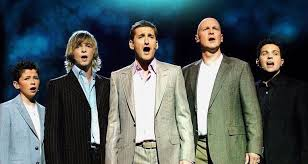
A Tapestry of Five Voices
As the verse progressed, the true magic of the arrangement revealed itself. Most versions of “Danny Boy” rely on a single soloist to carry the emotional burden, but Celtic Thunder treated the piece like a living tapestry. Each member stepped forward to offer their own “vocal color.” One brought a weathered, baritone warmth that felt like home; another provided a soaring, crystalline tenor that seemed to reach for the very rafters of the arena.
The brilliance lay in the restraint. The performance didn’t rush toward a climax. Instead, it built slowly, layer by layer, voice by voice. By the time the group moved into the final chorus, the individual threads had woven into a massive, unstoppable wave of sound. It was no longer five men singing; it was a single, resonant force of nature that filled every corner of the room.
A Connection Beyond the Stage
For the music fans in attendance, the experience was visceral. You could see it in the way shoulders slumped in relief and eyes glistened under the house lights. This rendition managed to achieve the impossible: it felt both grand enough for a stadium and intimate enough for a kitchen table.
This is why Celtic Thunder continues to dominate the global stage. They understand that music fans today are hungry for authenticity. They don’t just want to be entertained; they want to be moved. By leaning into the raw emotion of their heritage, the group turned a standard ballad into a spiritual homecoming.

The Echo of Heritage
As the final, lingering note eventually faded into the dark, the silence returned—but only for a heartbeat. Then, the venue erupted. It wasn’t just the standard applause for a job well done; it was a release of the emotional tension the group had so expertly built.
In that moment, it was clear that Celtic Thunder hadn’t just performed a song. They had paid a heartfelt tribute to the very roots of Irish musical identity. For those few minutes, the distance between the stage and the soul disappeared, proving once again that some melodies are timeless for a reason—and some voices are destined to carry them.