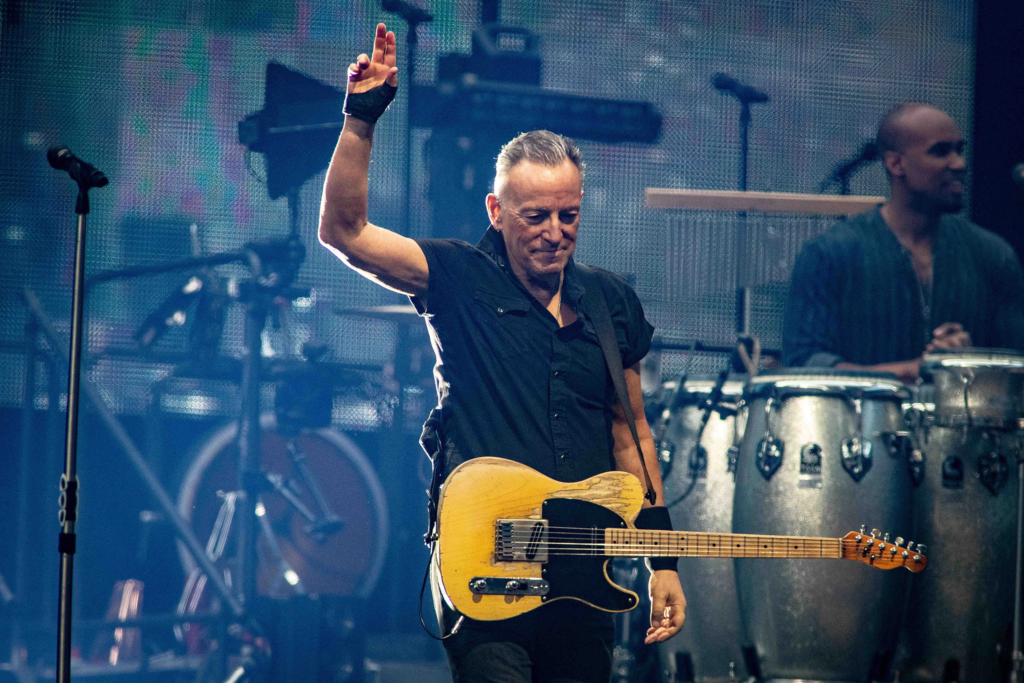
On May 14, 2025, inside Manchester’s Co-op Live Arena, something more than a concert began to unfold. When Bruce Springsteen and the E Street Band stepped onto the stage to open their “Land of Hope and Dreams” European tour, the night carried a sense of weight—like the first page of a story you knew would stay with you long after the final note.
Before any music filled the arena, Springsteen paused. Standing under the lights, he addressed the crowd directly, speaking with a clarity and conviction that immediately shifted the atmosphere. His words—sharp, critical, and deeply felt—called out the current U.S. administration as “corrupt, incompetent, and treasonous,” while urging those listening to “raise your voices against authoritarianism and let freedom ring.”
It wasn’t a casual introduction. It was a statement of intent.
From that moment on, the performance took on a different dimension. The songs weren’t just part of a setlist—they felt like chapters in a larger conversation. As the band moved through tracks like “Land of Hope and Dreams,” “Long Walk Home,” and “My City of Ruins,” each carried an added resonance, shaped by the words that had come before them.
When Springsteen stepped into Bob Dylan’s “Chimes of Freedom,” the choice felt deliberate. The song, long associated with reflection and resistance, fit seamlessly into the tone of the night—another thread woven into a performance that blurred the line between music and message.
The energy in the arena followed that lead. Fans weren’t just reacting—they were listening, absorbing, responding. It was the kind of atmosphere where every lyric seemed to land a little deeper, where the connection between artist and audience felt immediate and shared.
The significance of the night didn’t end when the lights went down. The performance was later captured and released as a digital EP titled Land of Hope and Dreams, preserving both the music and the moments between songs—the words, the pauses, the feeling in the room.
Outside the arena, the reaction spread quickly. Among those responding was Donald Trump, who took to social media with criticism, dismissing Springsteen as “overrated” and “a dried-out prune of a rocker.” The exchange added another layer to the unfolding narrative, pulling the performance into a wider public conversation.
But inside the world of music, the response leaned in a different direction.
Fans and critics alike focused on what had happened on stage: a performance grounded in emotion, conviction, and a clear sense of purpose. For many, it wasn’t about controversy—it was about witnessing an artist fully committed to his voice, both musically and personally.
That commitment has long been part of Springsteen’s identity. Across decades, his songs have told stories of struggle, hope, and resilience. In Manchester, those themes didn’t just echo—they stood front and center, tied directly to the present moment.
As the “Land of Hope and Dreams” tour continues across Europe, each stop carries that same blend of sound and substance. The shows offer more than familiar songs; they invite audiences into something deeper—a shared space where music becomes a way to reflect, question, and connect.
And in Manchester, on that opening night, it was clear: this wasn’t just the start of a tour.
It was the continuation of a conversation that Bruce Springsteen has been having with the world for a very long time—only now, it feels louder, sharper, and more relevant than ever.