When Celtic Thunder stepped onto the stage in Poughkeepsie to perform “Christmas 1915,” they weren’t just delivering another holiday song. They were crafting one of their most haunting and deeply felt performances to date. Known for a unique ability to bridge the gap between storytelling and song, the group turned this live moment into a profound reflection on the heavy toll of war and the delicate, flickering hope for peace.
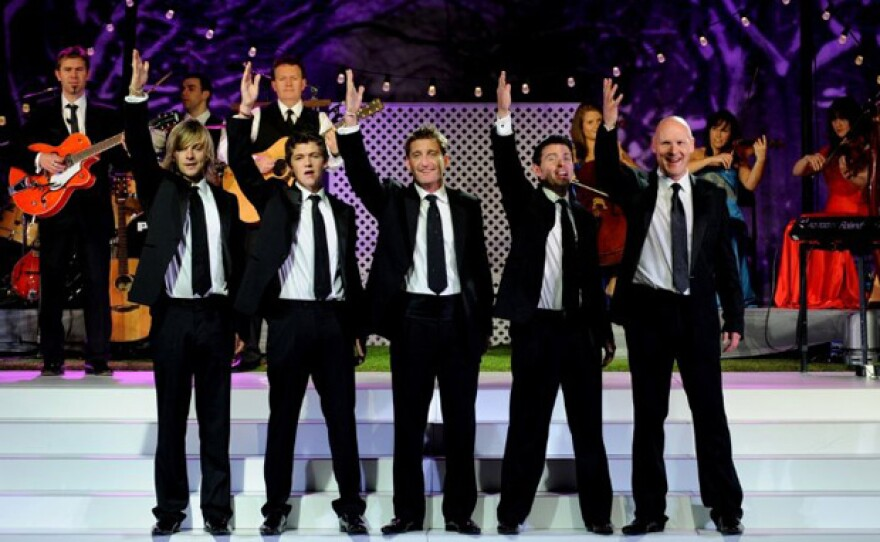
The shift in the room was immediate. From the very first solemn notes, the audience fell into a heavy silence. The song itself tells the story of a soldier’s deep longing for home on a cold Christmas night, and the group made every single word resonate like a prayer whispered across a century. Their harmonies wrapped around the melody with a tenderness that felt fragile, yet carried a power that painted vivid scenes of snow-covered battlefields and the suffocating silence of sorrow.
The vocal blend was nothing short of cinematic. Damian McGinty’s remarkably pure tone paired with the warmth of Ryan Kelly and the rest of the ensemble created a sound that felt both grand and deeply human. Each voice seemed to carry its own weight—representing youth, loss, and the universal yearning for peace in a world falling apart. The raw emotion in the air was so thick it felt as though the room itself were leaning in to listen.
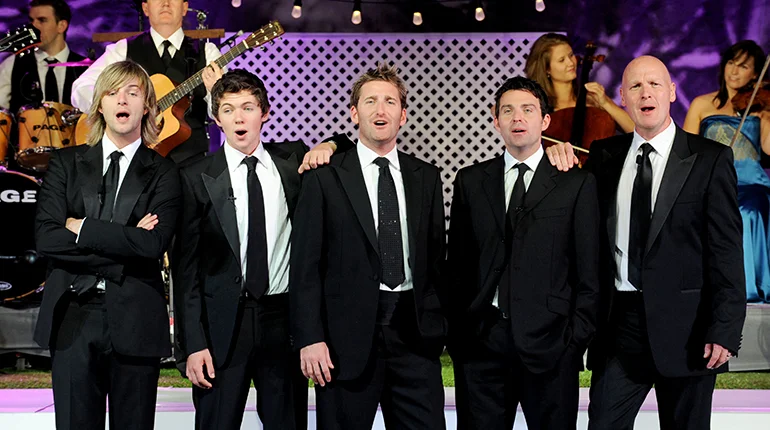
As the lyrics reached the part of the story where soldiers laid down their weapons for one miraculous, silent night, the stage lights dimmed to a soft, almost holy glow. In the audience, tears began to glisten as strangers found themselves united in a quiet moment of remembrance for those who never made the journey back home. One fan perfectly captured the gravity of the moment, noting that while they had heard the song many times before, this specific rendition made the music feel sacred.
The true beauty of Celtic Thunder lies in the fact that they never simply “sing” a piece; they embody the moment entirely. Every small gesture and every deliberate pause between verses carried a significant weight. It felt as if time had stopped to allow history to speak. In that space, “Christmas 1915” stopped being a performance and transformed into a living, breathing memory.
Behind the vocalists, the orchestra swelled with the gentleness of waves hitting a shore, lifting the voices without ever threatening to drown them out. When the final chorus arrived, it was delivered as a whisper rather than a shout—fragile and reverent, like the light of a single candle flickering in the dark.
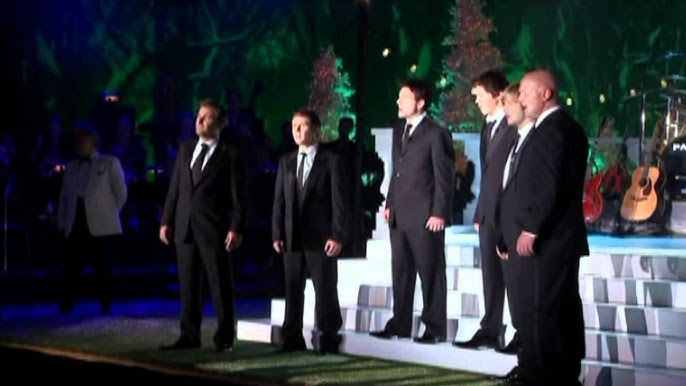
When the last note finally faded into the rafters, the audience didn’t immediately break into applause. Instead, there was a long, heavy silence—that rare, breathtaking pause that happens only when art and humanity truly collide. When the cheers finally did come, they were thunderous and charged with emotion, breaking the stillness like a wave of relief after a long-held breath.
The digital world echoed this sentiment, with fans from across the globe flooding the group with messages of awe. Many admitted to crying from start to finish, moved by the reminder that even in the midst of conflict, the human heart never stops hoping. Others noted that only Celtic Thunder possessed the grace to make a song about a battlefield sound like a heartfelt prayer.
Since that night, this performance has become one of the group’s most cherished live milestones, serving as a reminder of why their music has such a lasting legacy. They don’t just provide entertainment; they provide a soul to the songs they choose. Their version of “Christmas 1915” stands as undeniable proof that music has the power to reach back through time and heal even the oldest wounds. As the stage lights eventually went dark in Poughkeepsie, the message of the night remained suspended in the air: peace, love, and remembrance—the most enduring gifts of all.