The air inside the venue was already thick with the kind of electricity that only accompanies a lifetime achievement celebration. It was Jon Bon Jovi’s night—a grand tribute to decades of gravelly anthems, stadium-sized sweat, and the relentless work ethic of a Jersey kid who conquered the world. But just as the evening reached its peak, the atmosphere shifted. From the wings of the stage, a silhouette emerged that nobody—not the fans, not the organizers, and definitely not Jon—expected to see.
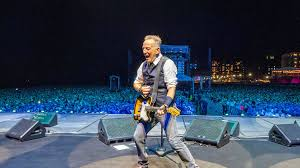
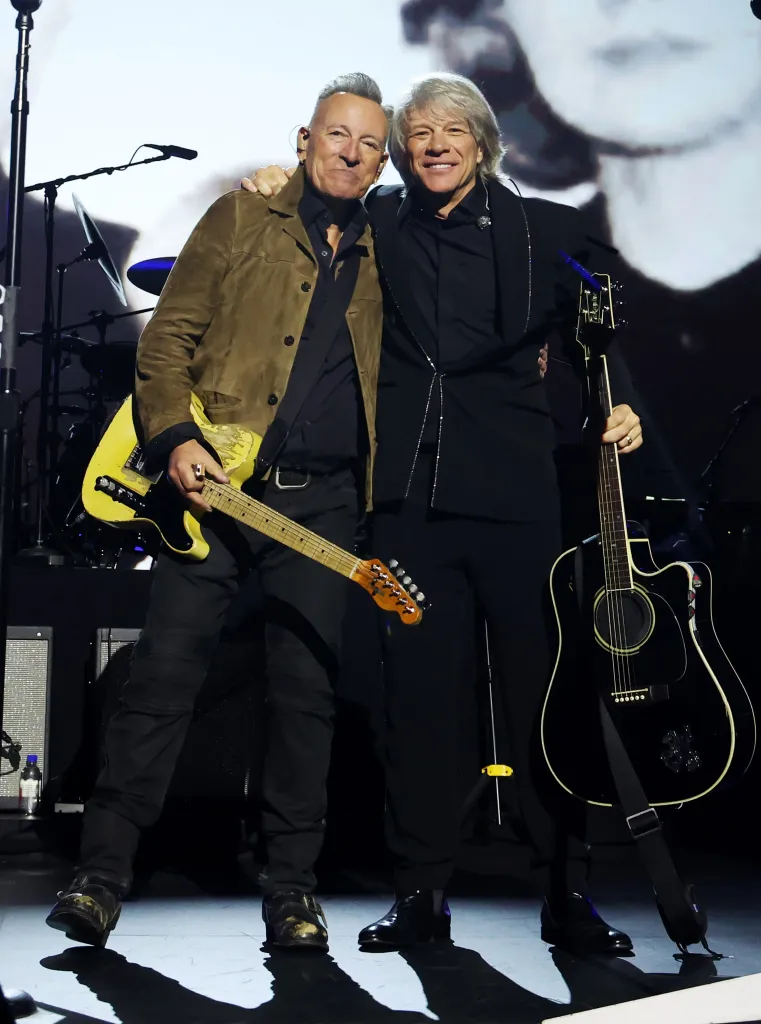
Bruce Springsteen, with a Telecaster slung over his shoulder and a lifetime of shared history in his stride, stepped into the light. The room didn’t just erupt; it froze. Just days earlier, the world had learned of the passing of Bruce’s mother, Adele—the woman who had famously bought him his first guitar and danced in the aisles of his shows for half a century. In that sudden, heavy silence, the crowd realized they were witnessing something far more significant than a surprise cameo.
A Presence That Spoke Louder Than Words
There was no theatrical introduction or booming voice-over to announce his arrival. There didn’t need to be. The raw power of Bruce’s presence provided all the context necessary. This was a man showing up for a brother during a week when anyone would have forgiven him for staying in the shadows.
Jon’s reaction was instantaneous. His eyes widened in genuine shock, and before the logic of the night could catch up, he was out of his seat and racing toward the stage. The two icons embraced in a moment of pure, unscripted humanity that seemed to pull the oxygen right out of the room. When they finally pulled apart, they didn’t waste time with speeches. They did the only thing they knew how to do: they let the music speak.
More Than Just a Melody
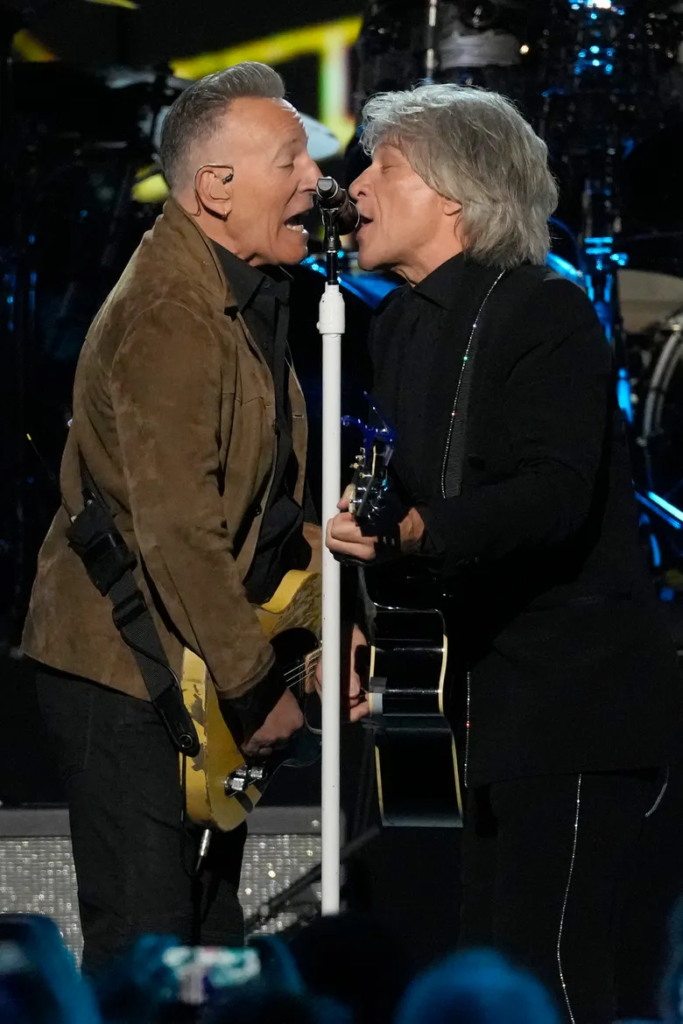
Without a second of hesitation, the duo launched into a duet of Bon Jovi’s “Who Says You Can’t Go Home.” It wasn’t a performance aimed at technical perfection or radio-ready polish. It was a gut-level, unfiltered exchange between two voices that have been weathered by thousands of miles and decades of shared experiences.
Every chord Bruce struck and every lyric they belted together felt like a shockwave. The song, a tribute to roots and belonging, took on a massive new meaning. This wasn’t just a hit single anymore; it was a living testament to loyalty. In the crowd, the industry’s biggest names and youngest fans alike were on their feet. Some were screaming the lyrics at the top of their lungs, while others were simply standing in silence, wiping away tears as they realized they were watching the last of a breed.
The True Meaning of Brotherhood
The emotional gravity of the night was anchored by the reality of Bruce’s grief. Adele Springsteen had passed away at the age of 98, and her influence on Bruce’s life was legendary. The fact that he chose to stand on that stage, in the middle of his own mourning, spoke volumes about the weight he places on his relationships.
As the final notes of the Telecaster faded into a roar of thunderous applause, Jon Bon Jovi took the microphone. His voice, usually so steady and commanding, wavered with visible emotion. “I would’ve understood if Bruce canceled,” he told the room, looking directly at his friend. “But he came. For MusiCares. And for me. That’s what brothers do.”
The night served as a powerful reminder that rock and roll has never really been just a genre of music—it’s a family. It’s a tribe that carries its members through the highest peaks and the deepest valleys. Two legends, one stage, and a single night that cemented itself into the permanent history of music.
And for those who think the magic was contained only to the minutes they spent under the lights… the story of what happened once the curtains closed might be the most enduring memory of them all.