Picture December 1, 2011, Madison Square Garden pulsing like a living beast—New York’s sacred ground for every guitar hero and sweat-soaked setlist. Bob Seger and the Silver Bullet Band are already owning it, that gritty Heartland sound we crave wrapping the crowd tight, voices hoarse from singing along before the surprise even lands. Then, out of the wings struts Bruce Springsteen, and the place erupts. What unfolds is no planned encore—it’s two lifelong road warriors, friends who get the grind, trading riffs on “Old Time Rock and Roll” like they’re reclaiming rock’s beating heart right there in the world’s most famous arena.
The air was already crackling. Seger, the Michigan poet with a voice like worn leather, had the room locked in—timeless hooks pulling everyone from diehards in faded tees to first-timers into his world of blue-collar anthems and open highways. But Bruce’s drop-in? That flipped the script. These two—mutual admirers who’d crossed paths in the shadows of fame—unleashed something feral. Seger’s gravelly roar meshed with Springsteen’s white-hot howl, turning the 1978 banger (that Risky Business staple from ’83) into a living revival. Guitars snarled, the band locked in tight, and suddenly the song wasn’t just nostalgia—it was a fist-pump declaration of where rock lives: in the raw, unfiltered now.
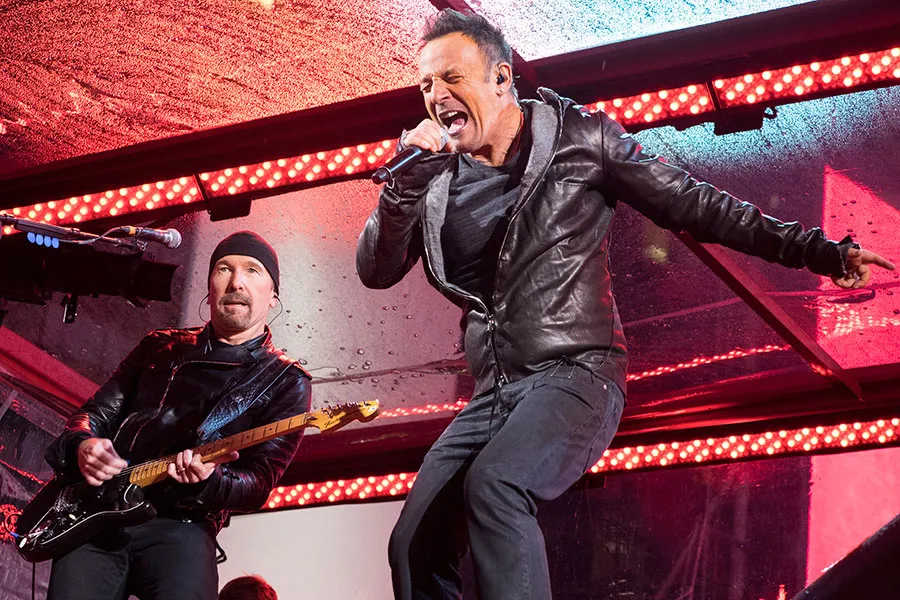
For Springsteen fans, it hit personal. The Boss had ripped into “Old Time Rock and Roll” himself back in ’89 at Asbury Park’s Stone Pony, that Jersey dive where E Street magic brews eternal. Sharing the MSG stage with Seger? Pure full-circle poetry—camaraderie forged in late-night jams and shared battles against the machine, respect earned from years of chasing the same fire. No ego, just synergy, two voices who’d howled through decades of sold-out sweat and near-misses blending like they’d rehearsed a lifetime.
This wasn’t some gimmick duet. It was rock’s lifeline laid bare—a bridge spanning eras, from Seger’s ’70s barroom roots to Springsteen’s factory-floor sagas. In that cauldron of cheers, it proved the genre’s soul: not solo stardom, but connection. Onstage, they fed off each other; in the stands, we all felt it—the communal rush that turns strangers into family, amps into altars. Long after the lights dimmed, that night lingered as reminder: rock endures because it gathers us, generation after generation, under the same roaring roof. For those who live for these unscripted collisions, Springsteen and Seger at MSG wasn’t history watched. It was history breathed, the kind that keeps the music alive in our bones.