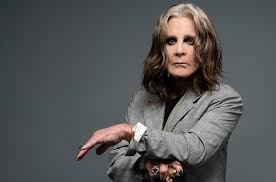
In the pantheon of rock ‘n’ roll excess, few figures loom as large or as wild as Ozzy Osbourne. As the fang-toothed frontman of Black Sabbath, he didn’t just lead a band; he pioneered a genre. To the world, he was the self-proclaimed “Prince of Darkness,” a man whose reputation for lunacy was as legendary as his vocals.
By 1979, the anarchy had reached a boiling point. His penchant for heavy substance use—famously highlighted by the band spending an eye-watering $75,000 on cocaine during the recording of Vol. 4—finally led to his dismissal from the group. Given the dark, drug-fueled chaos that defined his peak years, it is a delicious irony that Ozzy’s musical awakening was remarkably wholesome. The man who would eventually embody heavy metal’s darkest corners actually found his calling through a piece of pure, sun-drenched Merseybeat pop. 🤘☀️
A Crackle of Possibility in a Monochrome World
Before the infamous headlines and the heavy riffs, there was simply a working-class kid in Birmingham named John Michael Osbourne. He grew up in Aston, a drab industrial center that felt worlds away from the glitz of superstardom. In those days, life felt gray and the future felt fixed.
But then, the distance between the backstreets and the big stage suddenly vanished. It happened through a transistor radio. 📻
The Beatles were always more than just a musical group; they were a cultural lifeline. Unlike the distant, polished stars of the previous generation, the “Fab Four” felt relatable. They looked and sounded like the people they played for. They didn’t represent an unachievable fantasy; instead, they sent a message to every ordinary kid in every ordinary town: a more thrilling life is possible.
The Moment the World Turned Technicolor
Ozzy once opened up about this pivotal shift in a 2016 interview, pinpointing the exact second the trajectory of his life changed. It was 1964, and the song was “She Loves You.”
“I come from the backstreets of Aston in Birmingham and it wasn’t a very cool place when I was growing up,” Osbourne recalled. “I used to sit on my doorstep and think, ‘How the hell am I going to get out of here?’ And then one day ‘She Loves You’ came on the radio.” 🎤🌟
It is difficult for modern listeners to grasp just how explosive that sound was in the early ’60s. The Beatles had taken the DNA of skiffle, blues, and music hall and electrified it into something entirely new. For a teenager looking for an exit, it was a revolution.
“That song turned my head around,” Ozzy explained. When his son asks what it was like to witness the birth of Beatlemania, Ozzy describes it as a physical transformation of reality: “Imagine going to bed in one world, and then waking up in another that’s so different and exciting that it makes you feel glad to be alive.” 🌈
From Pop Seeds to Heavy Metal Roots
With those shimmering harmonies, Lennon, McCartney, Harrison, and Starr effectively severed the UK from its post-war gloom. They replaced a monochrome existence with a world soaked in technicolor optimism. For Ozzy, this wasn’t just a catchy tune—it was the beginning of everything.
It is a fascinating piece of music history to consider. The seed planted by the “Yeah, Yeah, Yeahs” of The Beatles eventually grew into the haunting, heavy chords of Black Sabbath. While Ozzy’s career would eventually become much louder, darker, and heavier, its foundation was built on pure pop magic.
Long before he was biting bats or leading the heavy metal charge, Ozzy Osbourne was just a wide-eyed listener who found hope in three chords and a hook. It proves that for all the madness that followed, his journey started with the simplest and most powerful realization of all: escape was possible. 🚪🤘🔥