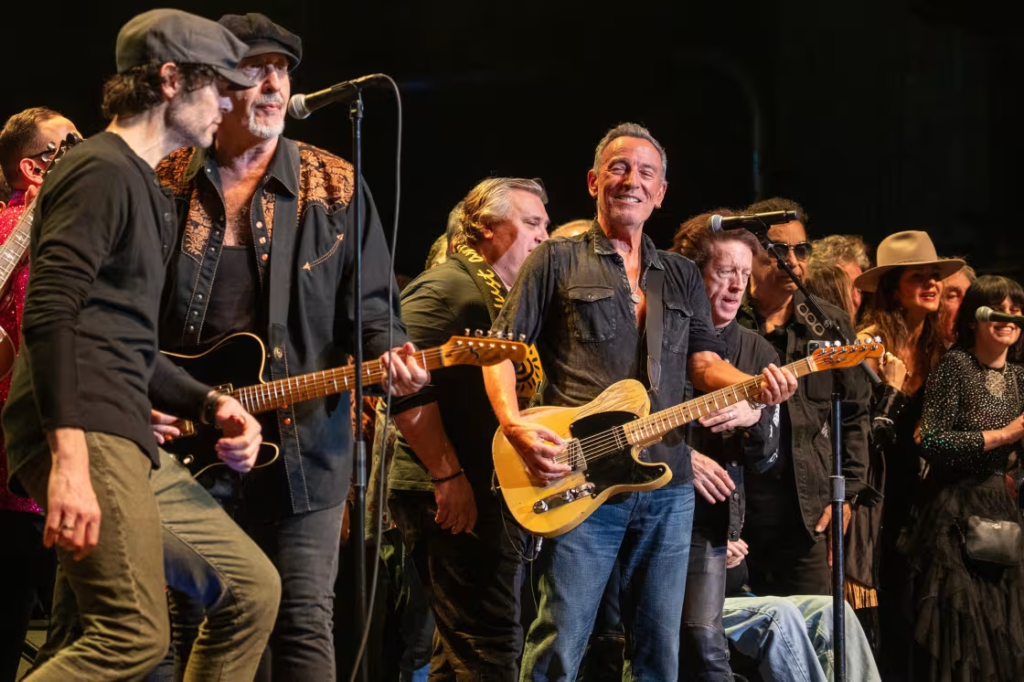
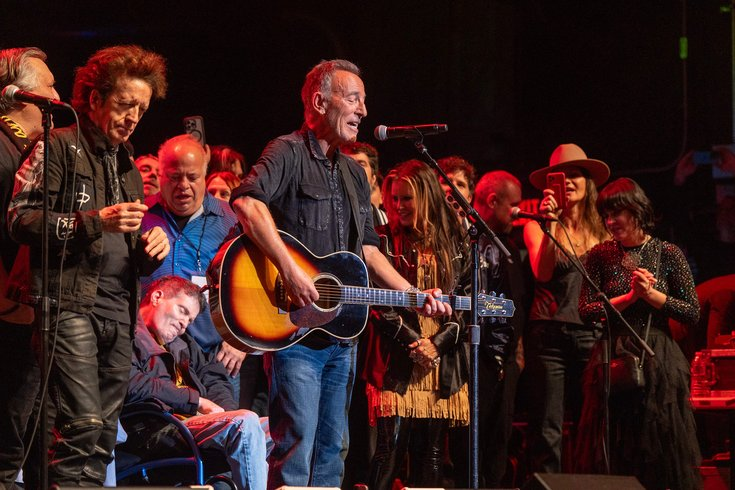
In the long, storied history of the Jersey Shore’s music scene, the Count Basie Center for the Arts has witnessed countless legendary sets. But on a recent Saturday night at the Light of Day Winterfest, the air in Red Bank shifted from celebratory to somber, then surged into defiance. Bruce Springsteen, the man who has spent fifty years chronicling the American soul, stepped to the microphone not just to play a classic, but to issue a blistering indictment of a nation in turmoil.
The “Boss” turned his gaze toward Minneapolis, dedicating his 1978 anthem “The Promised Land” to the memory of Renee Nicole Good—a mother of three whose death at the hands of federal agents has ignited a firestorm far beyond the borders of Minnesota.
A Promise Under Fire
Before the first harmonica wail of the song began, Springsteen addressed the home-state crowd with a gravity that hushed the room. He explained that he originally penned the track as an “ode to American possibility,” a vision of a country where the horizon is wide and the law is just. However, he told the audience that those very ideals are currently “being tested as they have never been in modern times.”
Springsteen didn’t mince words when describing the federal surge in Minneapolis. He characterized the recent crackdown as an invasion of an American city by “heavily armed, masked federal troops,” accusing them of employing “Gestapo tactics” against their own fellow citizens. The comparison to Nazi Germany’s secret police—a force defined by unaccountable cruelty—served as a stark, provocative reminder of the stakes Springsteen feels are at play.
The Tragedy in the Twin Cities
The heart of Springsteen’s outrage lies in the residential streets of Minneapolis. Renee Good was behind the wheel of an SUV, having just dropped her six-year-old off at school, when she and her partner, Becca, encountered an immigration enforcement action in their neighborhood. According to their family lawyer, Antonio M. Romanucci, the couple stopped simply to observe and support their neighbors, driven by Renee’s desire to “see a better world for her kids.”
The encounter turned fatal when ICE officer Jonathan Ross fired three rounds into the vehicle as Good began to pull away. While federal officials have defended the shooting as a “defensive action” against a moving vehicle, cellphone footage from the scene shows Good turning the steering wheel away from the officer before the shots were fired.
The fallout has been a bitter war of words. Homeland Security Secretary Kristi Noem labeled Good’s actions “domestic terrorism,” while President Trump characterized the couple as “professional agitators.” Conversely, local leaders like Minneapolis Mayor Jacob Frey and Governor Tim Walz have demanded accountability, questioning why the FBI has sidelined local authorities in the investigation.
A Message to the White House
Standing on the Red Bank stage, Springsteen echoed Mayor Frey’s blunt demand: “ICE should get the f— out of Minneapolis.”
He issued a direct challenge to the President, urging anyone who believes that exercising the right to protest shouldn’t be a death sentence to make their voices heard. “If you believe in the power of the law and that no one stands above it,” he told the cheering crowd, “then send a message.”
The response from Washington was swift and dismissive. White House spokesperson Abigail Jackson issued a statement through The New York Times, stating, “Unfortunately for Bruce, no one cares about his bad political opinions.” Jackson went on to argue that true belief in the law would mean supporting the deportation of “criminal illegal aliens” and recognizing an officer’s right to self-defense.
The Power of the Song
As the music finally kicked in, “The Promised Land” felt less like a relic of the seventies and more like a dispatch from the front lines of 2026. For the music fans in attendance, it was a reminder of the role the storyteller plays in American culture—to bear witness when the “possibility” he once sang about feels like it’s slipping away.
In Minneapolis, the enforcement surge continues, and videos of violent arrests continue to proliferate on social media. But for one night in New Jersey, the names of the fallen were sung aloud, ensuring that the “Promised Land” remains something worth fighting for, rather than just a memory in a song.