In the early weeks of 1982, Bruce Springsteen retreated to his bedroom in a rented house in Colts Neck, New Jersey. He wasn’t looking for a hit, and he certainly wasn’t looking to make rock history. At the time, he was simply a songwriter with a problem: a collection of new, haunted stories that needed to be captured before they drifted away.
What followed was a moment of creative isolation that would produce Nebraska—an album that started as a rough blueprint for the E Street Band but ended up as a stark, skeletal masterpiece that remains one of the most powerful recordings of the 20th century.
From Demo Tape to Definitive Statement
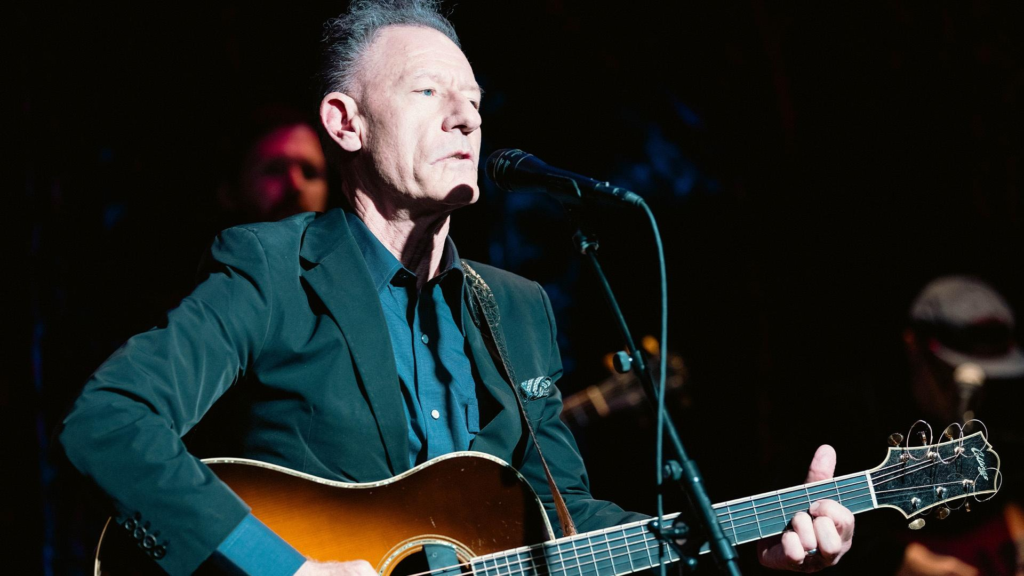
The setup was as humble as it gets. Armed with a portable Teac four-track cassette recorder, an acoustic guitar, a handful of harmonicas, and the occasional chime of a glockenspiel or a low synthesizer hum, Springsteen tracked 20 songs. The intent was functional: he wanted to create a roadmap for his bandmates so they could eventually head into a professional studio and turn these sketches into the kind of soaring, stadium-ready rock found on The River.
However, as Springsteen lived with the cassette, carrying it around in his pocket and listening to the playback, a realization began to take hold. There was a ghostly, untouchable intimacy in those bedroom takes. Every hiss of the tape and every creak of his chair seemed to amplify the desperation of the characters he was writing about. He realized that the “roughness” wasn’t a flaw—it was the soul of the project. The songs didn’t need the E Street Band; they needed the silence of that bedroom.
A Walk Through the American Gothic
While his previous work often leaned on anthemic hope and the thrill of the open road, the world of Nebraska was cast in a deep, unforgiving gray. The album played like a collection of short stories, a musical “American Gothic” that traded the bright lights of the boardwalk for the shadows of the hinterlands.
The narrative arc is uncompromising. It opens with the title track—a chilling meditation based on the real-life 1958 killing spree of Charles Starkweather—and closes with the hollow, haunting “Reason to Believe.” Between those bookends, we meet a cast of drifters, outlaws, and broken men. We hear the moral struggle of “Highway Patrolman,” where family blood clashes with a badge, and the frantic despair of “Johnny 99,” an auto worker pushed over the edge by a closed plant and a mountain of debt. Even “Open All Night,” the record’s only moment of kinetic energy, feels less like a joyride and more like a lonely flight through a landscape of isolation.
The Power of the Unfiltered
When Nebraska arrived on September 30, 1982, it was a complete anomaly. There was no promotional tour, no glossy music videos, and no radio-friendly singles. Despite the lack of traditional industry muscle, the album climbed to No. 3 on the Billboard charts. Critics were floored by its vulnerability, recognizing it as a brave departure for a man who had become a global symbol of working-class resilience. On Nebraska, the resilience has run out, and we are left with the breaking point.
Springsteen and the band did eventually try to record these songs in a professional studio with full electric arrangements. Yet, even “The Boss” had to admit that the high-fidelity versions couldn’t touch the quiet, devastating power of that original cassette. The studio sessions were shelved, and the demos were released exactly as they were captured: raw, lo-fi, and entirely unfiltered.
The Legacy of the Shadows
The ripples of the Nebraska sessions were felt long after 1982. Some of the songs recorded during that period—most notably a stark, acoustic version of “Born in the U.S.A.”—would later be reimagined as the foundation for his 1984 juggernaut. For decades, many of the other outtakes remained in the vault until the release of the Nebraska ’82: Expanded Edition in 2025, which gave fans a rare, deeper look into the solitary creative process of that winter.
Today, Nebraska is more than just a folk-rock record; it is a testament to the power of storytelling. It marked the moment Bruce Springsteen evolved from a rock icon into a literary force, proving that sometimes the loudest thing a musician can do is lower their voice. By turning away from the spotlights and into the shadows, he painted a more honest, complete, and enduring portrait of the American experience.