Some of the most unforgettable moments in music history are not the loudest ones. They are not always found in encore explosions, roaring guitar solos, or perfectly rehearsed speeches. Sometimes, they live in silence—in the hesitation between steps, in a glance toward an empty space onstage, or in the instant a song becomes tied to someone who is no longer there.
That kind of moment unfolded during a benefit concert at Madison Square Garden, when Bruce Springsteen unexpectedly stopped walking offstage after hearing the opening notes of “Jungleland” played from a piano behind him.
The crowd did not realize immediately what was happening. There was no dramatic announcement, no spotlight shift demanding attention. Chris Martin had quietly sat down at the piano and begun performing a stripped-back version of one of the most emotionally significant songs in Bruce Springsteen’s catalog. But for anyone who has spent years with the music of the E Street Band, “Jungleland” is more than just a classic track. It is a cornerstone of an era, filled with cinematic storytelling, restless energy, heartbreak, and longing.
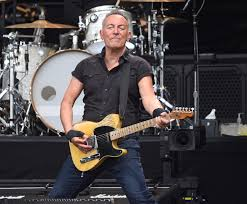
And woven into the soul of that song is Clarence Clemons.
For decades, Clarence Clemons’s saxophone solo in “Jungleland” stood as one of the defining moments in rock music. It was not simply an instrumental break—it was the emotional release of the entire song. His playing carried pain, romance, hope, and melancholy all at once. Fans did not just hear that solo; they felt it.
But Clarence Clemons was never only the saxophonist standing beside Bruce Springsteen. He was the “Big Man,” the towering presence whose chemistry with Bruce helped shape the spirit of the E Street Band itself. Their connection went beyond performance. It was friendship, brotherhood, and musical trust built over decades spent chasing songs across stages around the world.
When Clarence Clemons passed away in 2011, many fans felt the shift immediately. The music continued. Tours continued. Bruce Springsteen carried on doing what he has always done—telling stories through songs and bringing people together night after night. Yet even as the crowds kept singing every word, there was always an absence that could never fully be replaced. A certain space onstage no longer felt occupied in the same way.
That history made the Madison Square Garden performance hit differently.
As Chris Martin continued through “Jungleland,” he reached the section where audiences instinctively wait for the saxophone to rise and take over the song. But instead of trying to imitate Clarence Clemons or recreate the famous solo, Chris chose restraint. He kept the melody on piano, playing each note softly and carefully, almost like handling something fragile.
That choice changed everything.
The piano version did not attempt to fill the emptiness left behind by Clarence Clemons. Instead, it acknowledged it. Every note seemed less like a replacement and more like a quiet gesture of respect—a recognition that some sounds are too deeply connected to one person to ever truly belong to anyone else.
Bruce Springsteen had already started moving toward the side of the stage. Then he stopped completely.
In a venue as massive as Madison Square Garden, the atmosphere suddenly felt intimate. The crowd sensed the emotional shift immediately. Patti Scialfa stood nearby in the wings, watching as Bruce remained frozen in place, head lowered, listening to the melody drift through the arena without the saxophone that once defined it.
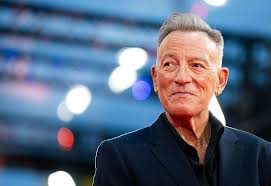
No speech was needed. No explanation was necessary.
What made the moment powerful was its honesty. It did not feel staged or overly polished. There were no giant tribute visuals or emotional monologues asking the audience how to feel. Chris Martin allowed the music to speak quietly, and Bruce Springsteen’s reaction said the rest.
For longtime fans, it was impossible not to think about how deeply Clarence Clemons remains connected to Bruce Springsteen’s music and life. Grief, especially the kind tied to decades of friendship, does not simply disappear. Over time, it changes shape. Sometimes it returns through memory. Sometimes through a familiar melody. Sometimes through hearing a song played differently enough to remind everyone of the person who used to stand at its center.
That was what made the silence inside the arena feel so heavy.
The audience understood they were witnessing something personal unfold in public. Bruce Springsteen stood caught between two moments—between leaving the stage and staying inside the memory for just a little longer. And in that pause, Clarence Clemons seemed present again, not through archival footage or recordings, but through the emotional space his absence still leaves behind.
Bruce Springsteen has spent his career singing about loyalty, friendship, heartbreak, and the ghosts people carry with them through life. On this night, one of those ghosts briefly stepped back into the room through the melody of “Jungleland.”
Not with spectacle. Not with noise.
Just enough to make Bruce Springsteen stop walking.