When Bruce Springsteen appeared on The Late Show with Stephen Colbert during one of the program’s final episodes, viewers expected sharp humor, emotional reflection, and perhaps a few memorable stories from two longtime public figures who have never been shy about their opinions.
What unfolded instead became one of the most talked-about moments of the show’s closing stretch — a conversation that moved far beyond entertainment and into the growing tension between politics, media, comedy, and public criticism in modern America.
The appearance came shortly after Donald Trump publicly celebrated the cancellation of Stephen Colbert’s late-night program on social media. In a post that quickly spread online, Trump mocked the host directly, writing: “I absolutely love that Colbert got fired. His talent was even less than his ratings. I hear Jimmy Kimmel is next. Has even less talent than Colbert!”
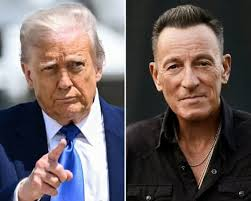
The comments immediately reignited debate around the increasingly hostile relationship between political figures and late-night television personalities, many of whom have spent years openly criticizing Trump through satire and commentary.
Sitting beside Stephen Colbert on stage, Springsteen made it clear he had no interest in avoiding the controversy.
Rather than limiting his remarks to a simple defense of Colbert, the legendary songwriter used the moment to speak more broadly about what he views as growing hostility toward comedians, journalists, artists, and entertainers who challenge political power publicly.
Springsteen praised Colbert for spending years using comedy as a tool for questioning authority and exposing hypocrisy, arguing that satire has long played an important role in American culture. According to Springsteen, attempts to mock or silence comedians for criticizing political leaders create a dangerous precedent — one that risks discouraging honest expression and public dissent.
At one point during the conversation, Springsteen reportedly told Colbert: “You’re the first guy in America who’s lost his show because we got a president who can’t take a joke.”
The audience responded immediately, and clips of the exchange quickly spread across social media platforms, fueling intense reactions from supporters and critics alike.
For Springsteen, however, the discussion appeared to go beyond one television host or one political argument. He reflected on what he described as a widening cultural divide in the United States, where entertainers, media personalities, and public figures increasingly face backlash simply for expressing political opinions openly.
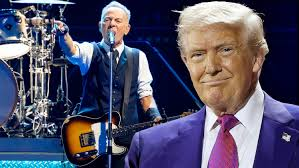
According to the musician, artists have a responsibility to speak honestly during difficult moments, even when those statements invite criticism or controversy. He suggested that remaining silent out of fear ultimately weakens the role art and entertainment can play in challenging power and encouraging public conversation.
The emotional context of the interview added even greater weight to the discussion. With The Late Show approaching its conclusion, many viewers described the exchange as feeling larger than a typical celebrity appearance. It carried the atmosphere of a cultural reflection — not only on the end of a television era, but on the changing relationship between politics, comedy, and media itself.
Throughout his career, Bruce Springsteen has rarely separated music from social commentary. From songs about economic hardship and working-class frustration to outspoken political appearances, he has long embraced the role of artist-as-commentator, often using both his music and public platform to address issues he believes matter deeply.
His latest appearance with Colbert reinforced that reputation once again.
Online reaction to the interview was immediate and deeply divided. Supporters praised Springsteen for defending free expression and “speaking truth to power,” while critics accused him of further blurring the line between entertainment and political activism.
The polarized response reflected a larger reality that has increasingly defined American public life in recent years: politics and celebrity culture have become almost impossible to separate.
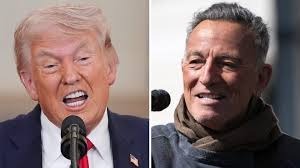
Late-night television hosts now frequently serve as political commentators. Musicians openly endorse candidates and criticize leaders from the stage. Public figures are expected not only to entertain, but also to take visible positions on cultural and political debates.
For some audiences, that openness feels necessary and authentic. For others, it feels exhausting and divisive.
Either way, Springsteen’s appearance made one thing unmistakably clear: even as The Late Show approaches its final episodes, the debates surrounding media, comedy, politics, and free speech remain as intense as ever.
And in true Bruce Springsteen fashion, he chose not to step quietly around that conversation — but directly into the center of it.