The lights dimmed, and for a brief second, the venue held its breath.
No one quite knew what they were about to witness—only that something important was coming. Then came the first delicate notes of “Hello Heaven, Hello,” stripped down and almost fragile, like a confession whispered into the dark. And just like that, the story began.
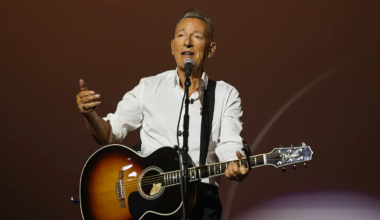
On stage stood YUNGBLUD—not as a performer trying to impress, but as an artist seemingly possessed by something larger than himself. The early acoustic moments felt intimate, almost sacred. The crowd leaned in, caught between silence and anticipation, as if afraid to interrupt a moment still forming.
But rock music rarely stays quiet for long.
What started as a gentle unraveling quickly erupted into something far bigger. The song swelled, building into explosive choruses that didn’t just fill the arena—they consumed it. People weren’t just watching anymore; they were part of it. Voices rose in unison, feet stomped in rhythm, and the entire venue transformed into a living, breathing organism of sound and emotion.
It wasn’t just performance—it was ignition.
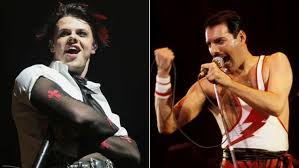
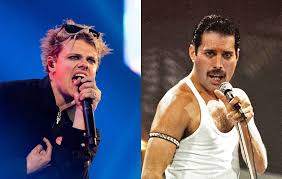
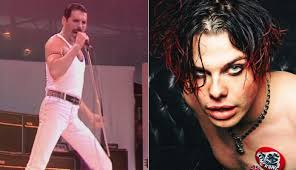
Somewhere in that chaos of sound and light, echoes of greatness surfaced. The presence of Freddie Mercury seemed almost tangible, as if the spirit of rock’s most theatrical legend had slipped quietly into the room to observe. YUNGBLUD didn’t imitate it—he channeled it in his own raw, unpredictable way, blending vulnerability with rebellion in a way that felt instinctive rather than studied.
And then came the moment that sent shockwaves beyond the stage.
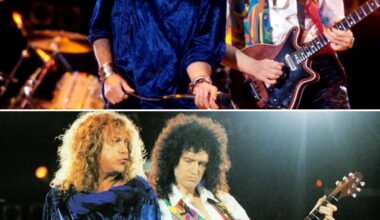
Brian May, watching from the crowd, recognized something undeniable. His comparison of YUNGBLUD to Freddie Mercury wasn’t just praise—it was validation. It was a nod from rock royalty acknowledging a flicker of continuity, as if the torch hadn’t been passed, but reignited.
From that point on, the performance felt different. Heavier. Sharper. More electric.
The nine-minute journey of “Hello Heaven, Hello” unfolded like a rock opera compressed into raw emotion. Each shift in tempo felt like a new chapter—quiet reflection giving way to explosive release, chaos dissolving into control and back again. YUNGBLUD moved through it all like a conduit rather than a frontman, letting emotion dictate every scream, every breath, every pause.
And the crowd responded in kind. Strangers became a chorus. Doubt became belief. Stillness became motion.
By the time the final notes hit, it wasn’t just applause—it was catharsis. The kind that leaves ears ringing and hearts racing long after the lights come back on.
What made it unforgettable wasn’t perfection. It was honesty. The kind of unfiltered, messy, electrifying truth that rock music was built on. In an era where so much feels polished and predictable, this moment cracked everything open again.
YUNGBLUD didn’t just step into a legacy that night.
He collided with it—and came out blazing.