When a legend leaves the stage, the silence he leaves behind is never truly empty.
Just months after his final bow with Black Sabbath in Birmingham, the world of rock is still processing the absence of Ozzy Osbourne—the Prince of Darkness whose voice, presence, and spirit helped define generations of heavy music. His passing at 76 marked the end of an era, but not the end of his impact.
Because legends like Ozzy don’t really leave.
They echo.
And at this year’s MTV VMAs, that echo turned into a roar.
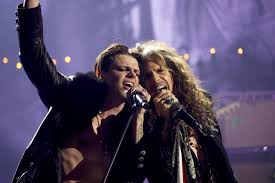
The night began like many award shows do—bright lights, anticipation, and a crowd waiting for something unforgettable. But what unfolded quickly became more than a performance. It became a moment of shared memory, emotion, and raw musical power that bridged generations of rock fans in real time.
On stage stood YUNGBLUD, a voice often described as the chaos of modern youth—unfiltered, emotional, and unapologetically loud. But this time, he wasn’t just performing for himself or his generation. He was carrying something heavier: a tribute to a man whose influence shaped the very sound of rebellion.
Joining him were rock titans whose names alone could command arenas. Steven Tyler brought his unmistakable voice and presence. Joe Perry delivered the kind of guitar fire that has defined decades of rock history. And Nuno Bettencourt added a precision and intensity that elevated every second of the performance.
From the first note, the atmosphere shifted.
This wasn’t polished entertainment designed for applause. It felt alive—unstable in the best possible way, like something too powerful to fully contain. The guitars didn’t just play; they screamed. The vocals didn’t just rise; they fought for space in the air. Every sound felt like it was reaching out to something bigger than the stage itself.
And in that moment, the audience wasn’t just watching musicians perform.
They were witnessing history react to itself.
Ozzy Osbourne’s influence has always lived in extremes—too loud, too wild, too honest to ever be ignored. He helped shape Black Sabbath into a foundation for heavy metal, and in doing so, changed how the world understood rock music entirely. His voice became a symbol of defiance, vulnerability, and survival wrapped into one.
That is what made the tribute so powerful.
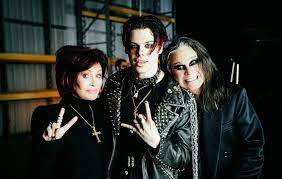
It wasn’t about nostalgia alone. It was about continuity.
As Yungblud stood at the center of the performance, there was a sense that something had shifted. Not a replacement of what came before, but a continuation—like a flame being carefully passed forward rather than extinguished. Around him, the legends didn’t overshadow the moment; they reinforced it, proving that rock’s identity is not frozen in time but constantly reborn through those who carry it.
For fans watching, it wasn’t just a tribute—it was confirmation.
Confirmation that Ozzy’s fire still burns in every distorted riff, every shouted lyric, every heart that still believes music can be loud enough to mean something. 🤘🔥
As the final notes rang out and the stage lights dimmed, there was no sense of an ending. Instead, there was something closer to inheritance.
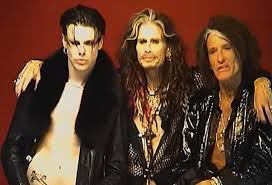
A reminder that while voices may fade, influence doesn’t.
It evolves.
And in that evolution, Ozzy Osbourne’s legacy didn’t just survive the night—it ignited it.