The Tragic and Powerful Story of Karen Carpenter: A Voice That Will Never Be Forgotten
Karen Carpenter remains one of the most unforgettable voices in music history. Known for her serene, emotionally resonant tone, she rose to global fame alongside her brother Richard Carpenter in the soft pop duo, The Carpenters. Behind the melodic harmonies and chart-topping hits was a life filled with silent battles, personal heartbreaks, and unattainable standards that eventually led to a devastating end. This article revisits her remarkable journey and the heartbreaking truths behind the brilliant sound that touched millions of hearts across the globe.
Born on March 2, 1950, in New Haven, Connecticut, Karen was the younger sibling of Richard Carpenter by nearly four years. Their parents—Agnes and Harold Carpenter—ran a household steeped in music but short on emotional warmth. From a young age, Richard displayed prodigious musical talent, quickly becoming the family’s center of attention. Karen often lingered in his shadow, though she adored her brother and followed him in his musical pursuits. This sibling dynamic, while close on the surface, planted seeds of low self-worth in Karen that would haunt her throughout her life.
Their father’s broad record collection exposed the children to a wide array of genres, from classical to jazz. Although Richard took to instruments like the accordion and piano with natural ease, Karen blossomed later in her teen years—surprisingly, as a drummer. Initially joining the marching band at school to avoid gym class, she soon became deeply passionate about rhythm and beats. In 1965, she and Richard joined forces with a friend to form the Richard Carpenter Trio, which saw modest success in California’s emerging music scene.
Despite early obstacles, including a failed contract with RCA Records, Karen and Richard pressed forward. Karen’s vocals began to draw attention, and Richard realized the remarkable potential of her voice, encouraging her to step into the spotlight as a lead singer. That decision proved crucial when Herb Alpert, co-founder of A&M Records, heard Karen sing and signed them to the label in 1969. The Carpenters’ debut album “Offering” didn’t make waves, but their next effort, “(They Long to Be) Close to You” catapulted them to fame in 1970, selling millions of copies and dominating the Billboard charts.
Their follow-up singles, such as “We’ve Only Just Begun,” “Rainy Days and Mondays,” and “Superstar,” confirmed their star status and led to accolades including Grammy Awards, sold-out tours, and international recognition. Karen’s voice became the heart of each song she sang—warm, unique, and full of emotion. However, with fame came unbearable pressure. As the spotlight grew, Karen’s personal struggles deepened, particularly with body image and the underlying desire for parental approval—especially from her emotionally unavailable mother.
In the mid-1970s, fans began noticing Karen’s declining health. She had fallen into a pattern of extreme dieting, sparked by offhand praise about her initial weight loss. Soon, what began as healthy intentions spiraled into a serious eating disorder—anorexia nervosa, which was tragically misunderstood at the time. Her condition worsened, hidden under layers of clothing and silence. Despite deep concern from friends and colleagues, her family brushed aside these fears, insisting she was just being careful about her figure.
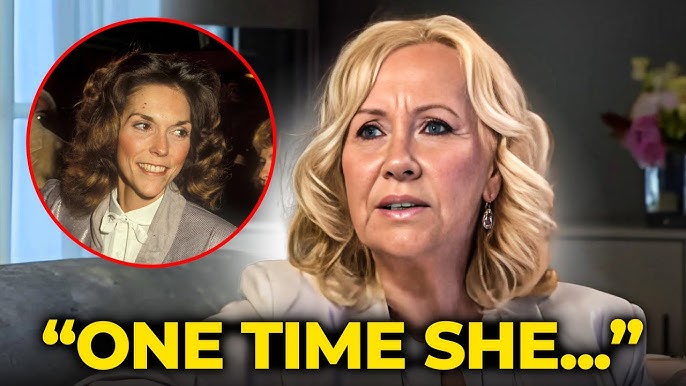
In 1978, music history witnessed a brief but meaningful moment when Agnetha Fältskog of the legendary Swedish band ABBA met Karen Carpenter during a taping of a European TV show. Agnetha later revealed how captivated she was by Karen’s extraordinary voice, remembering how emotionally profound her performances were. Their meeting, though brief, highlighted the mutual respect between two iconic women navigating fame and personal turmoil during a rapidly evolving era of pop music.
As The Carpenters’ musical reach continued to expand, Karen’s life took a darker turn. Her condition worsened, reaching a point where she was taking dozens of laxatives daily and misusing medication. In 1979, while Richard took time to address his own addiction issues, Karen began working on a solo album in New York, stepping outside of the Carpenters’ signature sound. The creative freedom thrilled her, yet the album was shelved by Richard and their label—a decision that shattered her emotionally. It was only released posthumously in 1996, a reflection of what might have been had she been allowed to pursue her artistic vision fully.
A Voice Silenced Too Soon
Despite ongoing personal battles, Karen tried to find love and peace in her personal life. In 1980, she married real estate broker Thomas James Burris. The relationship, however, turned toxic. Burris’s deception about his past, including a vasectomy that made it impossible for Karen to have children, and his controlling behavior led to the marriage’s rapid breakdown. Karen filed for divorce, but the emotional toll deepened her frailty.
In an attempt to reclaim her health, Karen sought professional help in New York in the early 1980s. With medical intervention, she briefly made physical improvements, regaining some weight. However, the long-term damage had already taken its toll. On February 4, 1983, the world lost one of its most touching voices. Karen Carpenter passed away at just 32 due to heart failure, the result of years of abuse from an eating disorder.
Her death was not only a tragic loss to the music industry, but it also highlighted the urgent need for greater awareness of mental health and body image issues within the entertainment world. Even in her final years, she never received the validation and love she longed for from her family—particularly from her mother, who could never bring herself to express the emotional support Karen so desperately needed.
The Enduring Legacy of Karen Carpenter
With over 150 million records sold worldwide, Karen Carpenter’s voice remains unmatched in purity, tone, and emotional depth. Her recordings continue to inspire and comfort generations of listeners. Her tragic journey also made an indelible impact on public knowledge surrounding anorexia and mental health issues.
Decades after her passing, fellow artists such as Agnetha Fältskog have expressed profound respect for her talent and sorrow over the pain she endured. Their shared moment in 1978 stands as a quiet tribute to the profound complexity of stardom and the human stories behind it. Karen was more than just an exceptional voice; she was a woman who faced her struggles with grace, heart, and enduring authenticity.
Karen Carpenter may be gone, but her legacy as one of the greatest vocalists remains eternal. Her music continues to share her soul with the world—a reminder that even the most beautiful voices can carry the deepest pain.