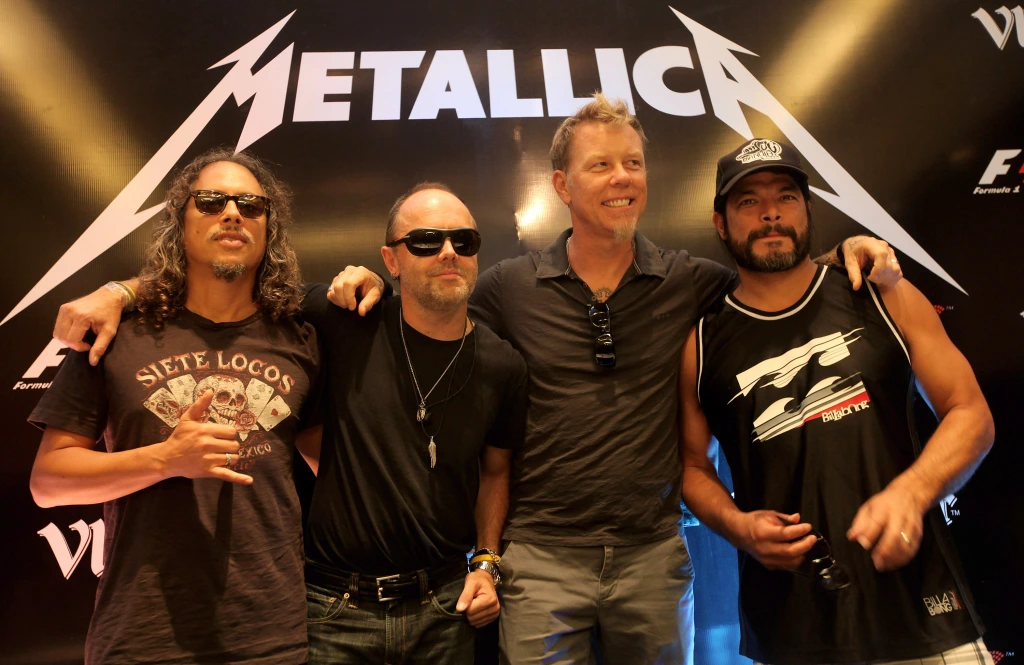
The unforgettable image of Metallica’s iconic frontman, James Hetfield, sharing the stage with pop powerhouse Lady Gaga during their fiery rendition of “Moth Into Flame” is etched into Grammy history. This unlikely duo ignited the 59th Annual Grammy Awards on February 12, 2017, at the Staples Center in Los Angeles.

Their collaboration didn’t originate in a studio or at a record label, but rather over dinner at actor Bradley Cooper’s home. It was there that Metallica drummer Lars Ulrich struck up a conversation with Lady Gaga, and inspiration sparked.

“We were seated next to each other,” Ulrich recalled. “I suddenly thought, ‘This could be awesome.’ So I said, ‘We’re doing the Grammys soon — want to jump in?’ And without hesitation, she said, ‘Absolutely.’”

That spontaneous conversation led to one of the most talked-about live performances of the night — a blistering, genre-defying version of “Moth Into Flame.” But their performance didn’t go entirely according to plan.

Before they even hit their first note, presenter Laverne Cox mistakenly omitted Metallica’s name in the introduction, an oversight she later addressed on Twitter. Then, a technical glitch rendered Hetfield’s microphone silent at the start of the performance.

Rather than faltering, Gaga acted fast. She moved to share her mic with Hetfield, turning what could have been a major setback into a powerful, improvised moment of musical unity.

In fact, it was that raw spontaneity — born from technical failure — that made the performance so compelling. While the rehearsal may have gone off without a hitch, it lacked the electric unpredictability of the live show. Gaga and Hetfield’s quick recovery and shared stage presence captivated the audience and earned applause not just for their music, but for their showmanship.

0 Shares:
Leave a Reply

Your email address will not be published. Required fields are marked *

You May Also Like
Read More

“I Still Hear His Laugh In The Quiet… And Sometimes, That’s All That Keeps Me Alive.” Grief doesn’t always cry—it sings. And no song bleeds deeper than “All My Love.” When Robert Plant lost his 5-year-old son Karac to a sudden illness, the world saw a rock god crushed by something no fame could shield him from. He didn’t write a hit. He wrote a goodbye. A prayer. A lullaby for a child who never got to grow up. And when he performed it live in 1980—during Led Zeppelin’s final tour—you could feel it: he wasn’t singing to fans. He was reaching for a boy he’d never hold again. His voice trembled. His eyes closed. The crowd, silent. For a moment, the arena vanished—and all that remained was a father, broken and brave, surviving one note at a time. “All of my love… to you.” It wasn’t a chorus. It was a wound. A promise. A forever. Because music doesn’t just remember the ones we lose. It becomes the place where they live on.

There are songs that entertain, and then there are songs that open a wound and let the light…
Read More

The concert night in Los Angeles seemed like any other. Bob Dylan stood still — silent, unmoving like a statue. But when the opening chords of “Like a Rolling Stone” rang out, something shifted. A young woman burst onto the stage, eyes gleaming, dancing like it was the last moment of her life. Instead of frowning or calling security, Dylan extended his hand. The entire venue held its breath. He turned, and moved with her rhythm. For thirty seconds, Bob Dylan — the immovable icon — danced. A slow spin, a soft wave of the arm. The crowd erupted. That moment replayed millions of times online. But only those present truly felt it: It wasn’t just a dance. It was the moment Bob Dylan became… human.

The crowd pulsed under the open sky at the Hollywood Bowl, an electric sea of voices waiting for…