“It didn’t feel like a concert. It felt like a goodbye he never got to say out loud.”
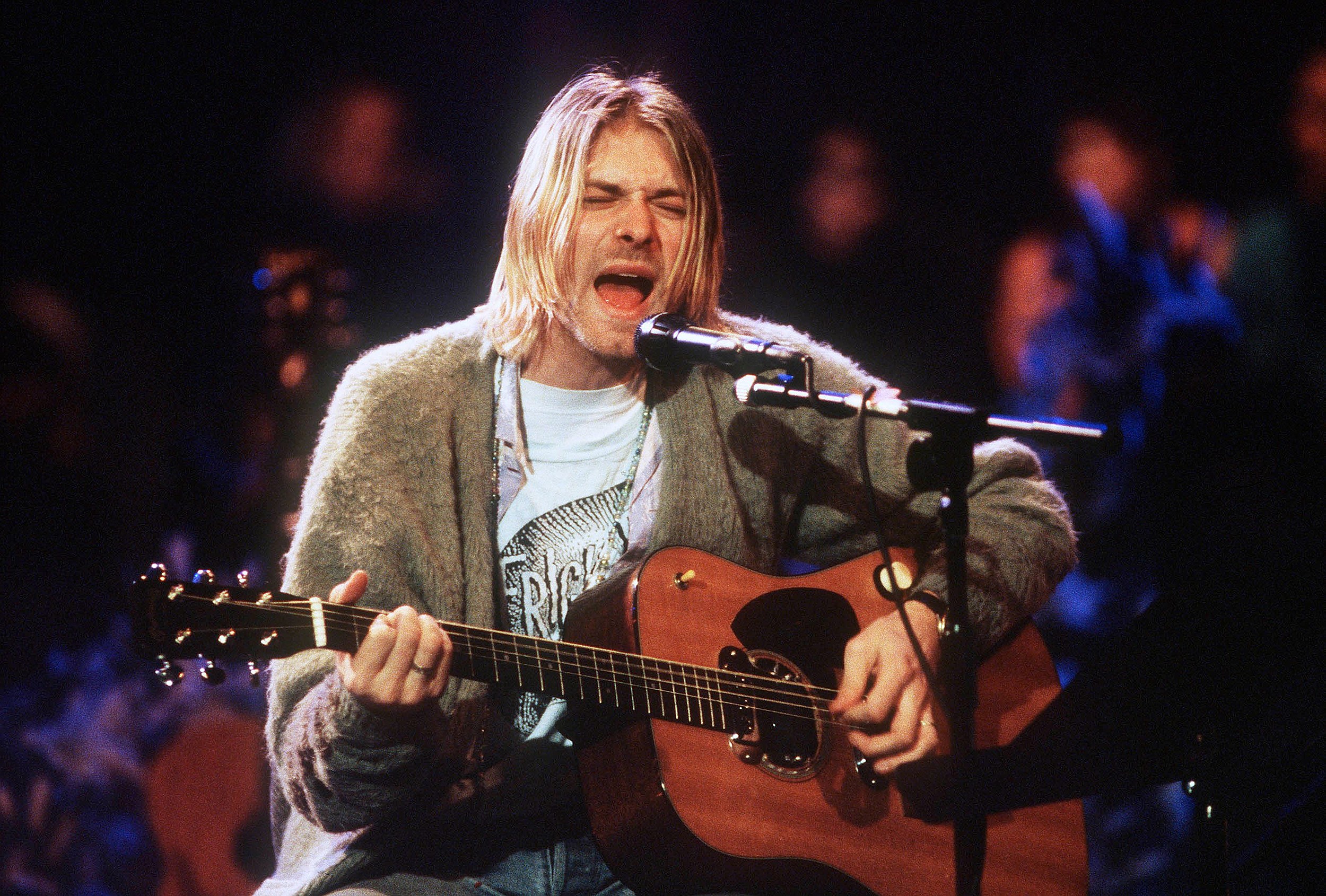
On November 18, 1993, Nirvana took the stage at Sony Music Studios in New York City for what would become one of the most haunting, intimate, and mythologized performances in the history of rock music. MTV Unplugged in New York wasn’t just another acoustic set — it became a raw confessional, a quiet unraveling, and, ultimately, a whispered farewell.
Five months later, Kurt Cobain was gone.

A Different Kind of Set
The night defied every expectation. Fans tuning in to MTV expected the usual Unplugged formula: stripped-down versions of chart-topping hits, some playful banter, and the comfort of the familiar. But Nirvana, in true Nirvana fashion, gave them something entirely different. There was no “Smells Like Teen Spirit.” No “Lithium.” Instead, the band opened with “About a Girl,” a lesser-known track from their 1989 debut Bleach, and never looked back.
What followed was a setlist that felt deeply personal, carefully chosen, and drenched in melancholy. Songs like “Dumb,” “Something in the Way,” and “Pennyroyal Tea” offered insight into Cobain’s troubled psyche, and his decision to include multiple covers — mostly obscure, deeply emotional tracks — said more than words ever could.
“It was like watching someone curate their own memorial,” one MTV producer later reflected. “Even in rehearsal, there was a strange calm in the room, like everyone sensed something bigger was happening.”

A Funeral on Stage
Cobain was adamant about the atmosphere. He told producers he wanted the stage to look “like a funeral.” White Stargazer lilies were brought in, along with black candles and a dark purple backdrop. At the time, it seemed eccentric — artsy, even. In hindsight, it’s chilling.
“I remember walking in and thinking, ‘Is this a wake?’” said Pat Smear, Nirvana’s touring guitarist. “It was beautiful, but it felt like something had already ended.”
The choice of lighting was soft, nearly funereal. There was no dramatic spotlighting, no flashy visuals — just a soft haze that bathed the room in warmth and sadness. The audience, seated just feet from the band, could see every flicker in Kurt’s eyes. Every wince, every smile that didn’t quite reach his eyes. It was as if the walls had come down, and for once, the myth of Kurt Cobain had vanished — replaced by the man beneath.

The Sound of Vulnerability
Cobain’s voice that night wasn’t pitch-perfect. It cracked, wavered, and trembled — and that’s what made it unforgettable. In “The Man Who Sold the World,” originally by David Bowie, his voice danced between weary detachment and burning honesty. The Meat Puppets joined the band onstage for three songs, including “Lake of Fire” — and even their presence seemed to carry symbolic weight, as if Cobain was handing the microphone to the forgotten and the misfit.
But it was the final song — a cover of Lead Belly’s “Where Did You Sleep Last Night” — that burned itself into the cultural memory of a generation.
Cobain’s voice started low and haunted, nearly whispering. As the song built, so did the tension in his face. His eyes closed tight on the final verse, jaw clenched, voice raw and uneven — until it erupted into a cry that sounded more like pain than melody. When the last note faded, he didn’t open his eyes right away. He sat still, breathing heavily, eyes clenched shut.
The silence was so thick, no one dared move.
No Second Takes
Unlike other MTV Unplugged artists who often redid songs for technical perfection, Cobain refused. “It has to be real, or not at all,” he reportedly told producers. One of them later admitted they had tried convincing him to redo “Pennyroyal Tea,” which had a vocal wobble in the middle — but Cobain insisted on leaving it in. That wobble, to him, was the point.
He didn’t want to polish anything. Not the music. Not the pain. Not the goodbye he was already composing in his head.
In a 1995 interview, producer Alex Coletti said, “He wasn’t interested in showmanship. He was interested in honesty, and he knew people would feel the truth more than any clean vocal track.”
The Aftermath
Kurt Cobain died by suicide on April 5, 1994. The broadcast of MTV Unplugged in New York became something far greater than originally intended. It wasn’t just a live album — it was a relic of grief, preserved on tape. When the performance was officially released as an album in November 1994, it debuted at number one on the Billboard 200 and went on to win a Grammy.
But more than charts or accolades, it became a spiritual document for a grieving generation. Fans would replay the final song, hearing it now through the lens of loss. Every crack in his voice sounded heavier. Every glance to the floor seemed to mean something more.
The album didn’t just capture a performance. It captured a moment when the façade dropped and the soul behind it was laid bare. Cobain’s pain, his poetry, his resistance to being commercialized — it all breathed through the quiet spaces between the notes.
A Moment That Still Echoes
Today, MTV Unplugged in New York remains one of the most revered live recordings in rock history. It wasn’t Nirvana’s loudest moment — but it was, perhaps, their truest.
The unplugged format stripped away the distortion, but what remained was something far louder: a man grappling with his own legacy, his fragility, and his humanity.
Watching it now, it’s hard not to see the performance as prophetic. The flowers. The candles. The ache in Kurt’s voice. And the silence at the end that still somehow says more than any lyric ever could.
As one fan commented under a YouTube clip: “He didn’t scream this time. He whispered. And somehow, it was the loudest thing he ever did.”
Epilogue:
The Unplugged session ends not with applause, but with breath. Cobain’s last note lingers in the air, then vanishes — like smoke curling into the night. And for just a moment, the world holds still. Waiting. Remembering.
Because some goodbyes don’t come with announcements.
They come with lilies, and candles, and the quiet hum of a guitar that once meant everything.