The Prince of Darkness didn’t just perform that night—he said goodbye the only way he ever knew how: loud, raw, and unforgettable.
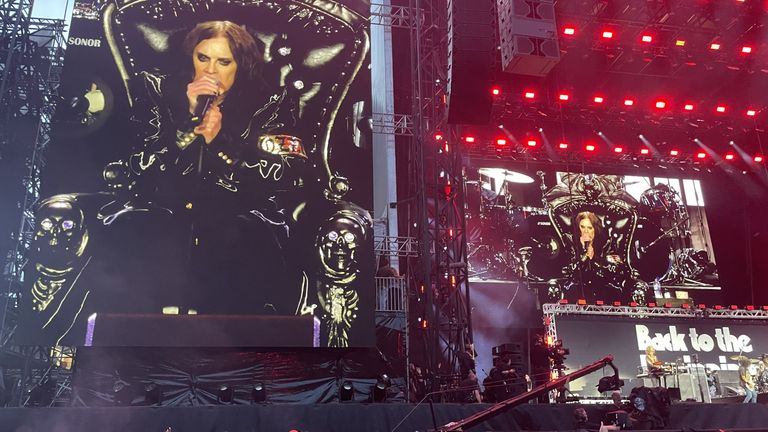
Back in Birmingham, the city where it all began, Ozzy Osbourne stepped onto the stage one last time, closing the curtain on a career that didn’t just follow heavy metal—it helped invent it. This wasn’t just another concert. It felt like the end of a chapter in music history, one written in distortion, rebellion, and a voice that defined generations.
The arena carried a different kind of electricity even before the lights dropped. Fans came from everywhere—some who had followed Ozzy since the early days, others who discovered him through headphones decades later. Vintage Blizzard of Ozz shirts mingled with fresh merch, and there was a shared understanding in the air: this night mattered. You could see it in people’s faces—anticipation, nostalgia, and the quiet realization that this would be the last time.
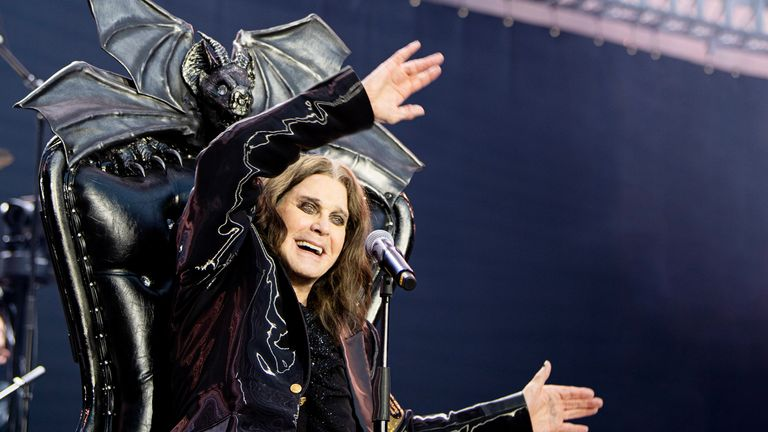
At 76, Ozzy was brought onto the stage, a reminder of the years behind him. But when the lights dimmed and that first surge of sound hit—“Bark at the Moon” ripping through the speakers—something shifted. He stood up, defiant as ever, and for a moment, time didn’t seem to matter. The voice, the presence, the energy—it was all still there. That same force that once shocked the world was now holding it captive one last time.
Behind him, Zakk Wylde’s guitar roared like it always has, thick and unapologetic, while the band locked in with the kind of chemistry that only comes from decades of shared stages and stories. Together, they didn’t just play songs—they brought memories back to life.
The setlist read like a journey through Ozzy’s legacy. “Crazy Train” hit with the same rebellious pulse that first made it an anthem. “Mr. Crowley” unfolded with its eerie, theatrical edge, while “No More Tears” stretched out into something almost hypnotic. Each track felt less like a performance and more like a moment being revisited, both by Ozzy and the thousands watching him.
Then came “Mama, I’m Coming Home,” and the mood shifted. The volume softened, but the emotion grew heavier. It wasn’t just another song in the set—it felt personal, almost like a conversation between Ozzy and Birmingham itself. The city that raised him, shaped him, and watched him become something larger than life.
Between songs, he spoke—not as a legend, but as someone looking back. “Birmingham, you made me who I am,” he said, his voice catching slightly. “And I will love you forever.” It didn’t feel scripted. It felt real. The crowd answered the only way they could—chanting his name, louder and louder, like they were trying to hold onto the moment just a little longer.
And then, inevitably, came the final stretch.
When the opening riff of “Paranoid” kicked in, it was like the entire arena moved as one. Voices rose, fists lifted, and for those few minutes, it didn’t matter who you were or when you first heard the song. Everyone was part of it. It was chaotic, emotional, and strangely beautiful—a shared release after decades of music that had meant so much to so many.
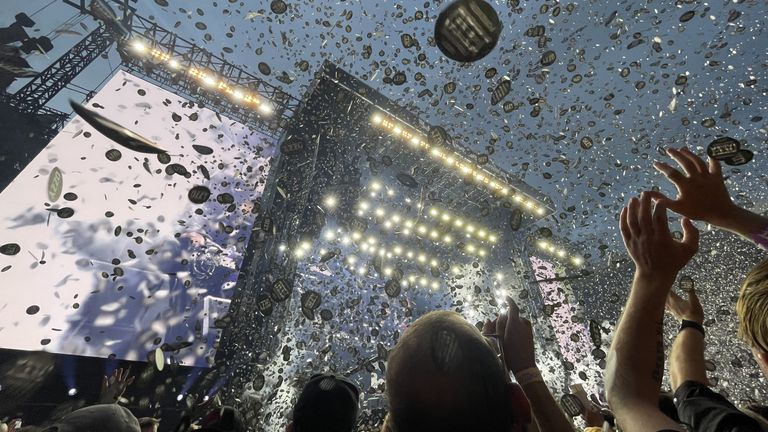
As confetti fell and the last notes rang out, Ozzy stood there, taking it in. One last look. One last moment. He bowed, not dramatically, but with a kind of quiet finality.
“Thank you, goodnight, I love you all,” he said.
And just like that, he walked off the stage—leaving behind a roar that didn’t feel like it would fade anytime soon.
Because nights like that don’t really end. They echo.