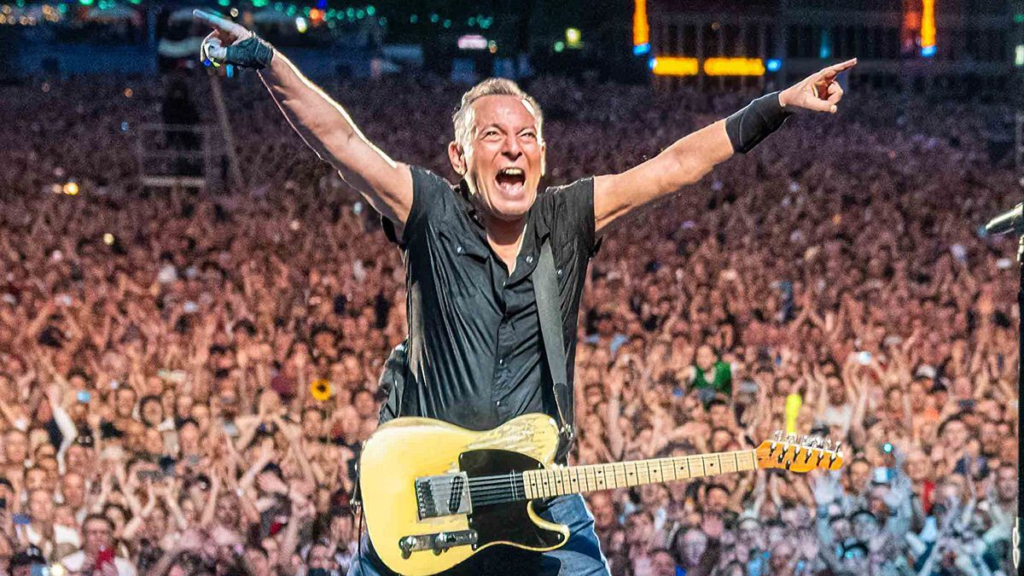
Just days ago, the lights dimmed at the Target Center in Minneapolis as Bruce Springsteen launched his Land of Hope & Dreams tour. While the night was designed to set the pace for a massive nationwide trek—stretching from the heart of Texas to the shores of Florida and the bustling streets of New York—it was a single, unscripted moment that stole the headlines. In a city where the air still hums with the spirit of its most famous son, Springsteen delivered a soul-stirring rendition of “Purple Rain,” joined by the formidable guitar work of Tom Morello.
The song, a centerpiece of Prince’s 1984 landmark album, is more than just a hit; it’s a piece of cultural architecture. Despite early debates over its provocative themes, the Purple Rain album dominated the Billboard 200 for nearly half a year, eventually moving over 25 million copies and earning a permanent place in the Grammy Hall of Fame. When Prince passed away in April 2016 at the age of 57, he left a void that the music world is still struggling to fill—a legacy that continues to challenge and inspire anyone who dares to pick up an instrument.
A Minneapolis Tribute Rooted in Legacy
Choosing to perform this specific anthem in Minneapolis was a move layered with meaning. The city isn’t just where Prince was born; it’s the place he helped build into a musical Mecca. By bringing Morello on stage to add his distinctive, modern edge to the classic arrangement, Springsteen transformed the moment from a standard tour cover into a deliberate act of reverence. It was a tribute delivered in the very geography where Prince’s story began, making the performance feel like a homecoming.
Springsteen Reflects on a Rare Kinship
The Boss has never been shy about his respect for the High Priest of Pop. In the wake of Prince’s death, Springsteen spoke with Rolling Stone about the “terrible shame” and the deep sense of tragedy he felt. He described a “great kinship” with Prince, an artist who, despite having a wildly different aesthetic, shared Bruce’s obsession with the craft of live performance.
For Springsteen, seeing a Prince show wasn’t just entertainment—it was a humbling experience. He once admitted that after watching the Minneapolis icon perform, he’d often think to himself, “Oh, man, OK, back to the drawing board.”
A Masterclass in Showmanship
It wasn’t just the songwriting that fascinated Bruce; it was Prince’s total command of the stage. Springsteen famously pointed to Prince’s legendary appearance on The Arsenio Hall Show as a pinnacle of the craft. “It’s just some of the greatest showmanship I’ve ever seen,” Bruce noted. “He knew everything. He knew all about it, and then could put it to work.”
Even as a legend who has spent half a century selling out stadiums, Springsteen has always viewed himself as a student of the game compared to Prince. “He’s one of the greatest showmen to come along,” he said. “I studied that stuff a lot and put as much of it to use as I can with my talents. But he just took it to another level.”
Nearly ten years after his departure, Prince’s presence remains a permanent fixture in the foundation of live music. On nights like the tour opener in Minneapolis, where tribute and legacy meet under the purple lights, it becomes clear that his influence hasn’t faded—it has only deepened.