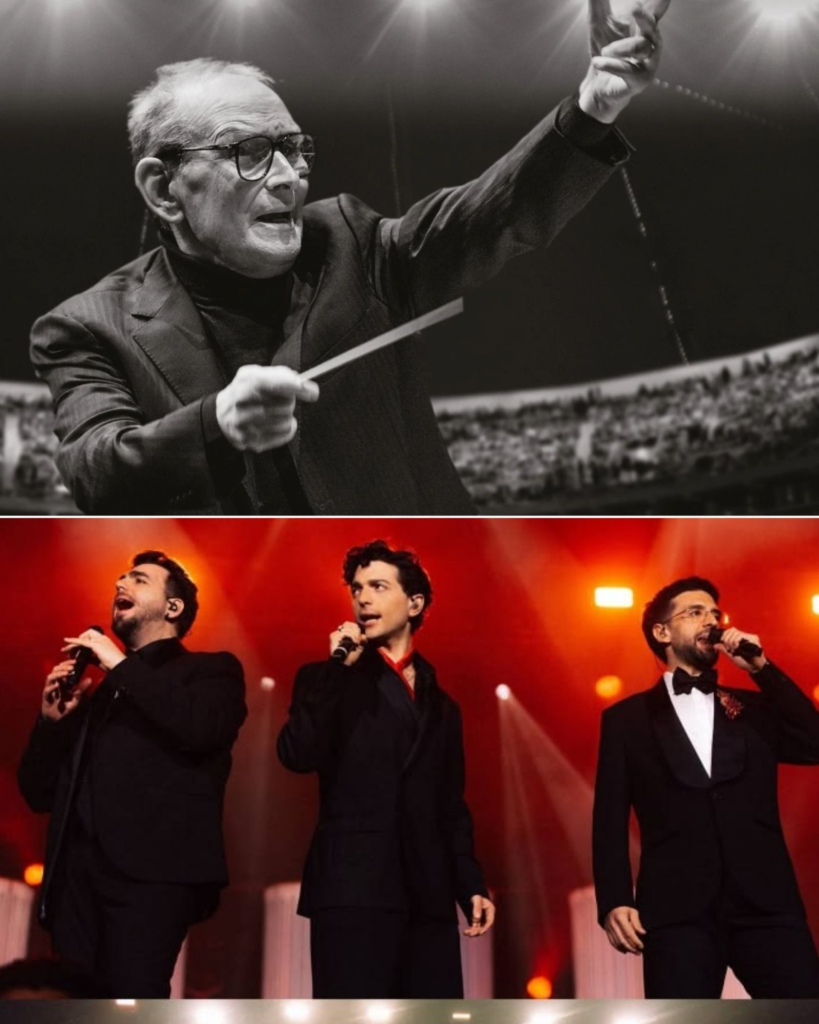
There are tribute concerts that exist simply to revisit the hits, and then there are moments that transcend the stage entirely, blurring the line between performance and a living memory. For the trio of Il Volo, standing before a hushed crowd in Rome to honor the legendary Ennio Morricone, the evening was far more than a standard engagement with a world-class orchestra. It was a spiritual intersection where generations met, where cinema dissolved into song, and where a collective sense of grief transformed into a profound act of gratitude.
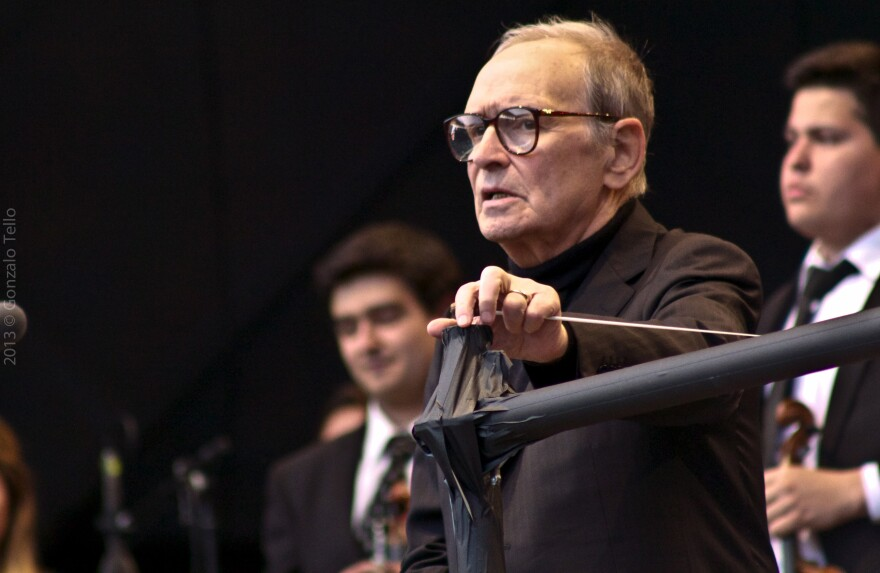
When Morricone passed away in 2020, the world didn’t just lose a composer; it lost a narrator of the human condition. Great composers have a way of entering our lives without an invitation. They arrive through a flickering film screen, a late-night radio broadcast, or a childhood memory, until suddenly, their melodies are woven into the very fabric of our own stories. Morricone’s work did more than just underscore a scene; he gave a voice to raw emotion before the actors ever opened their mouths.
A Stillness Before the Storm of Sound
As Il Volo stepped onto the Roman stage, the air held that rare, electric stillness that only occurs when an audience senses it is about to witness something historic. They weren’t just waiting for the music; they were waiting for a presence to return.
The soft glow of the stage lights met the ready instruments of the orchestra, and then the first notes of “Nella Fantasia”—the beloved vocal adaptation of Morricone’s Gabriel’s Oboe—began to drift through the hall.
Piero Barone took the first line, delivering it with a masterful restraint. He didn’t rush or attempt to dominate the space; instead, he opened the song like a door being pushed ajar with extreme care. Ignazio Boschetto followed, his voice adding a layer of warmth and a deeper, richer center to the melody. Finally, when Gianluca Ginoble joined the fray, the sonic landscape shifted. It no longer sounded like three distinct vocalists taking their turns in the spotlight. It felt like a single, massive emotion moving through three different hearts simultaneously.
Three Voices, One Soul
The true power of the performance lay in its humility. Il Volo didn’t perform as three men eager to showcase the individual strength of their lungs. Instead, they sang as if the song itself was the only thing that mattered. Their phrasing was deliberate, their harmonies perfectly disciplined—restrained when the moment required intimacy and soaring when the music demanded release. Every note was draped in a palpable sense of respect.
For those few minutes, the Roman hall felt suspended in time, caught between the earth and the heavens. The orchestra didn’t compete with the trio; it breathed with them. The arrangement rose and fell like a conversation with an old friend who was absent but certainly not forgotten. Looking across the audience, it was clear why so many were visibly moved. Ennio Morricone may have been physically gone, but his musical dialect lived on in every pause, every swell, and every lingering note.
Beyond the Spectacle
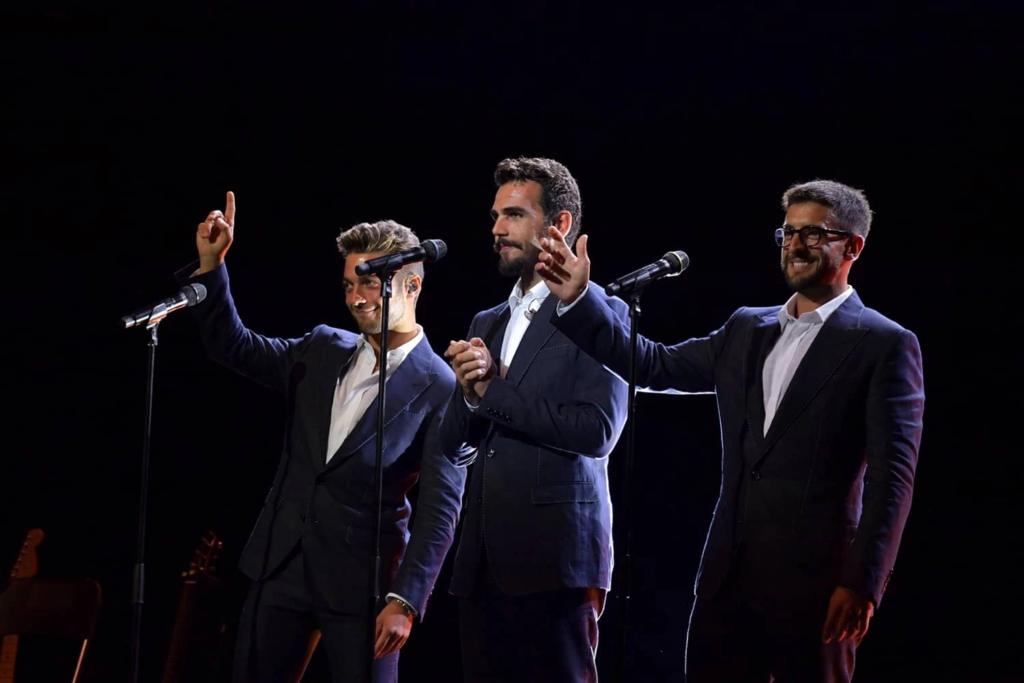
In a strange way, it didn’t feel like they were performing for him. It felt like they were performing with him.
That is the hidden alchemy of a truly great tribute. It doesn’t attempt to replace the artist who has passed; it simply clears a space where that artist’s spirit can be felt once more. Il Volo understood this implicitly. Rather than leaning into unnecessary theatrics, they trusted the purity of the song, the acoustics of the hall, and the sacred silence between the phrases. That choice made the eventual crescendo all the more devastating.
By the time they reached the final passage, the performance had become something universal. It belonged to the trio, to the Romans in attendance, and to anyone who has ever felt their soul stir at the sound of a Morricone score. It wasn’t about the spectacle of three “popera” stars; it was about the enduring presence of music that survives its creator.
Rome has played host to countless grand events over the millennia, but some nights linger in the stone and the air long after the last guest departs. This was one of them. It stayed because it wasn’t just loud or technically perfect—it stayed because, for a brief stretch of time, it felt as if heaven leaned down to listen. And somewhere in the ether, you could almost imagine Ennio Morricone, baton in hand, still conducting the silence between the notes.