On February 14, 2015, Italy wasn’t just celebrating romance; it was bracing for the final, unpredictable crescendo of the Festival di Sanremo. Falling on Valentine’s Day, the night felt pre-ordained for drama. Inside the historic Ariston Theater, the air was thick with a familiar blend of high-fashion elegance and the restless tension that defines the nation’s most beloved musical institution. It was the kind of evening where every performance felt like a national argument waiting to happen.
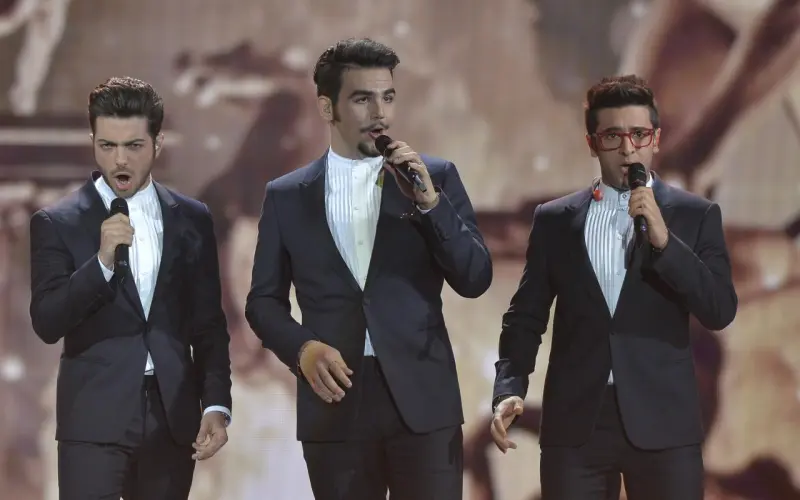
Then, three young men—Piero Barone, Ignazio Boschetto, and Gianluca Ginoble—stepped into the light.
They were polished, poised, and strikingly young, yet they possessed a boldness that ignored the modern trend of ironic detachment. They arrived with “Grande Amore,” a song that made no apologies for its scale. It was a composition that didn’t just ask for attention; it demanded a reaction through sheer vocal force and an unwavering belief in its own romantic gravity. When the final note soared and eventually landed, the theater didn’t just applaud—it erupted. It was the kind of explosive response that signals a crowd hasn’t just been entertained, but fundamentally moved by something they hadn’t expected to feel.
The performance was a triumph, but in the world of Italian music, a victory is often just the beginning of a long debate.

A Victory That Sparked a National Argument
Almost as soon as the trophy was hoisted, the celebration split into a fierce cultural divide. To their legion of supporters, Il Volo was a revelation. Here were three disciplined young vocalists bringing melody and unapologetic passion back to the heart of popular music. They represented a bridge to a classic era, proving that romance wasn’t dead in the digital age.
However, the critical response was far more complicated. Skeptics questioned where exactly Piero, Ignazio, and Gianluca fit in the modern landscape. Were they a glimpse into the future of “Popera,” or merely a carefully curated relic of the past? For some, they were too classical for the pop world; for others, they weren’t classical enough to satisfy the traditionalists.
This was the perfect cultural storm. Fans adored the tuxedos, the cinematic arrangements, and the grand, sweeping gestures that defined the performance. Detractors, meanwhile, winced at those very same qualities, dismissing the polish as “too much” or too eager to please. But perhaps that friction was precisely why it mattered. Sanremo has never been solely about the notes on a page; it’s a mirror held up to Italian identity. That night, Il Volo didn’t just sing—they walked directly into a national conversation about what music should represent in the 21st century.
The Power of Total Sincerity
The impact of “Grande Amore” stemmed largely from a sense of contrast. While their peers might have leaned into indie-pop sensibilities or gritty realism, Il Volo chose total, unshielded sincerity. There was no “wink” to the camera, no clever distance between the performer and the material. They committed to the song’s emotional stakes with a conviction usually reserved for seasoned veterans.
In an era where artists often use irony as a shield against looking “too sentimental,” Il Volo took the risk of being earnest. “Grande Amore” didn’t require a decoder ring; it offered big feelings, big stakes, and big voices. For millions, that directness wasn’t a flaw—it was a relief. Even if Italy couldn’t agree on what the trio represented, no one could deny that the moment was massive.
From the Ariston to the Global Stage
The debate only intensified when the group took “Grande Amore” to the Eurovision stage in Vienna. Critics wondered if a wider European audience would find the act old-fashioned or if the juries would keep their distance from such a theatrical style.
The results revealed a fascinating disconnect. While the professional juries placed Il Volo third—a respectable showing—the public televote told a vastly different story. Across the continent, ordinary viewers responded with overwhelming enthusiasm, placing Il Volo in first place.
That gap between the “experts” and the audience was revealing. It suggested that regardless of what critics thought about genre or image, the public recognized a visceral emotional connection when they heard it. The televote didn’t silence the critics, but it did prove that the song’s appeal was universal, transcending the borders of Italy and the confines of traditional music theory.
The Legacy of a Flashpoint
Looking back, the 2015 Sanremo final feels like more than just a win for a talented trio; it was a cultural flashpoint. It was a performance that turned admiration into an enduring legacy by the sheer virtue of how much it divided opinion. Piero, Ignazio, and Gianluca walked onto that stage as promising singers and walked off as symbols of a musical divide that still fuels discussions today.
We still talk about that night because it represents one of those rare moments where taste split in every direction, yet the sheer scale of the event was impossible to ignore.
So, when you revisit that performance today, where do you stand? Were they preserving a beautiful tradition, or were they pushing a modern spectacle dressed in old-world clothes? Perhaps the answer isn’t found in the argument itself, but in the fact that the applause is still echoing years later. History, it seems, made its choice while the lights of the Ariston were still warm.