The Kennedy Center Honors has a reputation for being the ultimate high-culture gala, a night of black ties and stiff collars. But every once in a while, the formal veneer cracks, and a moment of pure, unfiltered human connection spills out. Such was the case on the night the world watched Sting—a man whose career was built on the sleek, jazzy lines of The Police and a sophisticated solo career—step into the grit and dust of Bruce Springsteen’s New Jersey.
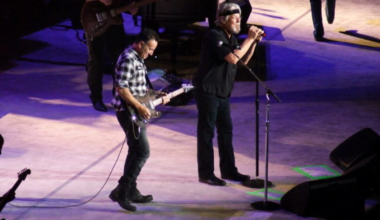
When the lights dimmed and the stage was bathed in a cathedral-like golden glow, the atmosphere shifted. It wasn’t just a tribute; it was a spiritual interrogation. Sting stood center stage, tasked with performing “The Rising,” an anthem that carries the heavy, hallowed weight of post-9/11 grief and the resilient fire of the human spirit.

A Different Kind of Fire
Bruce Springsteen is famously the architect of his own sound—a wall of sound built on telecasters, glockenspiels, and the thundering heart of the E Street Band. “The Rising” is traditionally a driving, gospel-infused rock song. But Sting, ever the musical alchemist, stripped away the stadium bravado. He traded the roar for a haunting, atmospheric vulnerability.
From the first few notes, it was clear this wasn’t going to be a carbon copy. Sting’s voice, possessing that distinct blend of weathered strength and ethereal sorrow, didn’t just sing the lyrics; he lived inside them. As he breathed new life into the story of a firefighter climbing into the smoke, the room fell into a silence so profound it felt as though the air had been vacuumed out of the hall.
The Boss Unmasked
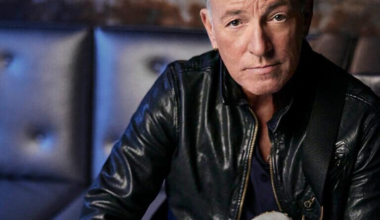
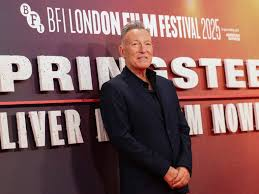
In the balcony, the cameras caught a rare sight. Bruce Springsteen, the man who has spent fifty years as the rugged, unshakable “Boss,” was beginning to unravel. We are used to seeing Springsteen as the leader of the charge, the one who provides the shoulder for a nation to lean on. But as Sting leaned into the microphone, Springsteen became the listener.
The “tough exterior” that has defined a legendary career started to soften. As Sting’s rendition moved toward the climax, a soaring choir joined him, their voices rising like a physical force toward the rafters. It transformed the performance into something almost liturgical. Springsteen’s eyes welled up, shimmering under the theater lights. By the time the final verse arrived—the one about “dream of life”—the man who wrote the words was seen wiping away tears, visibly moved by the power of his own poetry being reflected back at him through the soul of a peer.
A Sacred Resonance
What made the moment so magnetic for music fans was the sheer respect on display. It was a bridge built between two of the greatest songwriters of the 20th century. Sting didn’t just perform a hit; he honored the burden of the song. He recognized that “The Rising” isn’t just about loss—it’s about the exhausting, beautiful work of carrying on.
As the final notes dissolved and the choir’s harmony lingered in the air, the silence was shattered by a thunderous standing ovation. Springsteen stood, clapping not just for a friend, but for the realization that his music had grown legs and walked far beyond the boardwalks of Asbury Park. It was a reminder to every music lover in the room and at home: songs are our most durable cathedrals, and sometimes, it takes a different voice to show us just how high the ceilings really go.