There are albums that define a moment — and then there are albums that feel like someone opening their chest and turning emotion into sound. For Yungblud, “Idols (Part 1)” belongs firmly in the second category.
Released on June 20, 2025 through Locomotion Recordings and Capitol Records 📀, the project doesn’t arrive quietly. It lands like a statement — loud, vulnerable, and impossible to ignore. From the very first track, it becomes clear that this is not just music crafted for entertainment. It is music built from a journey inward — a search for identity, meaning, and emotional clarity.
At its core, Idols (Part 1) is about reclamation.

It follows an artist who has spent years being seen, judged, celebrated, and misunderstood all at once — and who now turns that chaos into reflection. Instead of chasing external expectations, Yungblud turns the spotlight inward, asking harder questions about who he is beneath the noise of fame and public perception.
The album, produced alongside Matt Schwartz, unfolds across 12 tracks that blend punk urgency, rock distortion, and pop sensibility into a single emotional wave 🎶⚡ Nothing feels polished in a way that removes its humanity. Instead, the production leans into intensity — letting imperfections, raw edges, and emotional cracks remain visible.
That’s what gives the album its power. It doesn’t try to hide the struggle. It sounds like the struggle.
One of the most impactful moments comes with the single “Zombie” 🖤. The track dives into emotional exhaustion, mental pressure, and the quiet battle of trying to survive inner pain while still functioning in the world. It’s not presented as a distant metaphor — it feels immediate, like a voice speaking from inside the storm. For many listeners, it became more than a song; it became a reflection of feelings they often couldn’t express out loud.
And that is where Idols (Part 1) finds its deepest connection with fans.
Across the album, Yungblud explores themes of self-acceptance, individuality, and resistance to social expectations 🌍🔥 These are not abstract ideas — they are lived experiences, shaped into lyrics that feel direct and unfiltered. There’s a sense that every track is reaching for something real, something unpolished, something honest.

What makes this chapter especially striking is the emotional maturity behind it. This isn’t the sound of rebellion for rebellion’s sake. It’s the sound of someone learning how to understand themselves more clearly. There’s frustration, yes — but also reflection. There’s chaos, but also awareness. And within that balance, growth quietly takes shape.
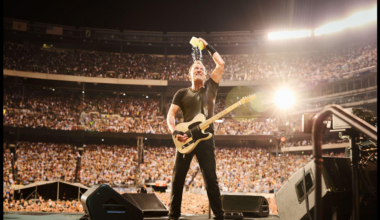
On stage, that transformation becomes even more powerful. Yungblud’s performances take the emotional weight of Idols (Part 1) and amplify it into something communal ⚡🎤 The songs stop being just personal expressions and become shared experiences — moments where artist and audience meet in the same emotional space.
Fans don’t just watch him perform these songs; they feel them alongside him.
And that is ultimately what Idols (Part 1) represents: a record built not from perfection, but from truth. It captures an artist refusing to simplify himself for comfort, choosing instead to confront identity head-on — even when it’s uncomfortable, even when it’s messy.
In doing so, Yungblud doesn’t just create an album. He creates a mirror.

A mirror for anyone trying to understand themselves in a world that constantly demands clarity, certainty, and control 🎸🔥