The 2026 BRIT Awards opened with the usual dazzle of lights and camera flashes, but the room took a quiet, emotional turn when the show paused to honor one of British rock’s most unforgettable figures: Ozzy Osbourne. The ceremony paid tribute to the late “Prince of Darkness” with a performance that felt less like a routine award‑show moment and more like a communal mourning, a shared memory, and a noisy celebration of metal packed into a single stage.
Robbie Williams, alongside Ozzy’s former tour musicians Adam Wakeman, Metallica’s Robert Trujillo, drummer Tommy Clufetos, and guitarist Zakk Wylde, took the stage for a supergroup performance of Ozzy’s 1991 hit “No More Tears.” The arrangement had been carefully curated by Sharon Osbourne, Ozzy’s wife, manager, and the emotional anchor of the Osbourne family for decades. Sharon, the BRITs organization later confirmed, had personally invited Robbie to participate, describing him as a long‑standing fan of the music and a close friend of the Osbourne family.
For those who knew Ozzy as a voice, a legend, and a survivor, the song choice hit deep. “No More Tears” had always carried a weight of its own—personal struggle, loss, the search for a new kind of peace—as much as it did a stadium‑filling riff. Now, performed in his honor, the track felt like a letter written back to him, the guitar solos filling the gaps where his raspy voice once howled.
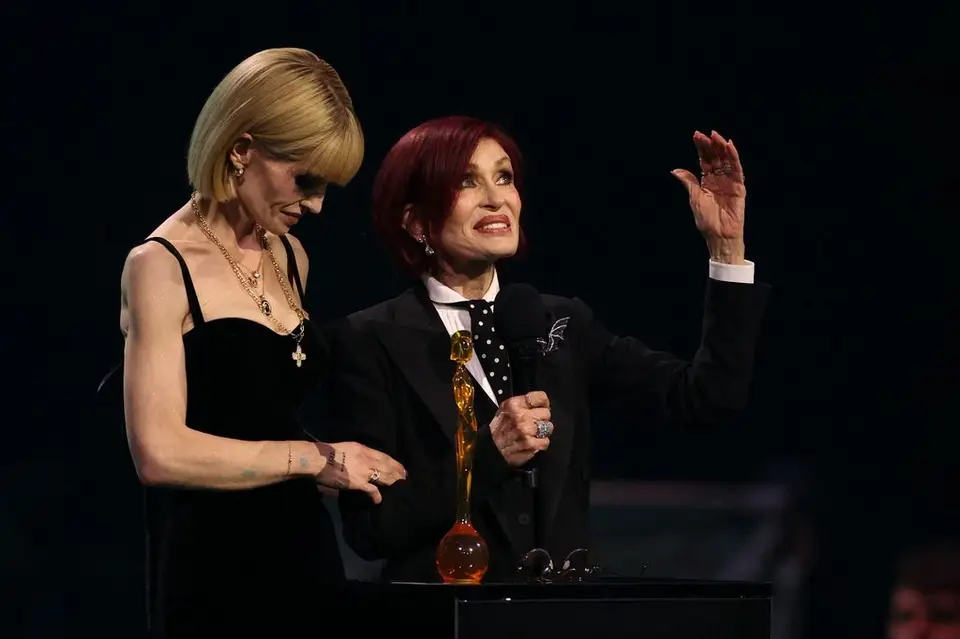
Ozzy received a posthumous Lifetime Achievement Award that night, the kind of recognition that carries both pride and a quiet ache. Sharon stepped onto the stage with her daughter Kelly, the pair forming a small, powerful semicircle under the spotlight, the weight of the moment written in Sharon’s eyes and the barely steadied tremble in Kelly’s hands. When the microphone reached her, Sharon’s voice wavered, but her words landed with clarity.
“If Ozzy was here tonight with us, he’d be showing us that gorgeous smile,” she said, the camera catching a soft, almost involuntary smile flicker across her own face. “And I know he would be so proud to receive this from the country he loved. He may not be here, but he left us an amazing body of work that will never be forgotten by the country that made him.”
The crowd rose, the wave of applause washing over the stage like a warm tide, the mix of clapping, cheers, and a few quiet tears mirroring the way so many fans encounter Ozzy’s music. In the quiet moments after the applause, Kelly stepped in with a mix of humor and heart. “Thank you for loving my father as much as we do,” she said, before adding with a small, bittersweet laugh, “and I hope I don’t disrespect Manchester by saying this, but, ‘Up the Villa, and Birmingham forever!’” The line wasn’t just a nod to football; it was a tribute to the working‑class roots that shaped Ozzy’s life and career from the start.
The BRITs committee, led by Stacey Tang, Chair of the 2026 BRIT Awards Committee and Co‑President of RCA Records at Sony Music UK, framed the honor in broader cultural terms. “Ozzy Osbourne has been a mighty force in modern music,” Tang said. “Possessing an unmistakable voice and unique presence, he reshaped the sound and spirit of rock, inspiring generations of artists who followed. This Lifetime Achievement Award recognises a remarkable legacy built on originality and enduring influence, that continues to connect with fans worldwide.”
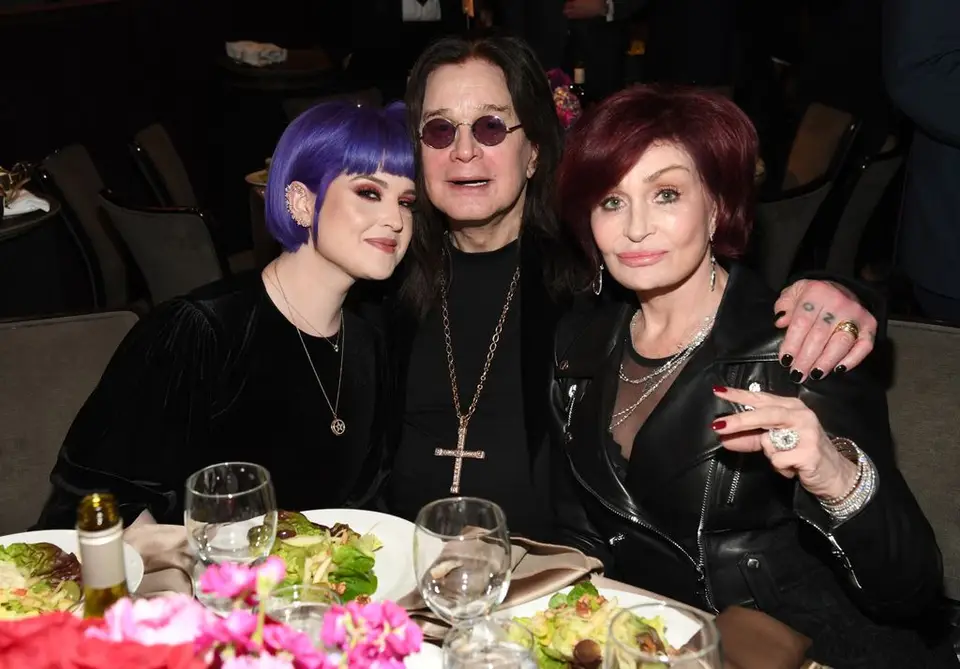
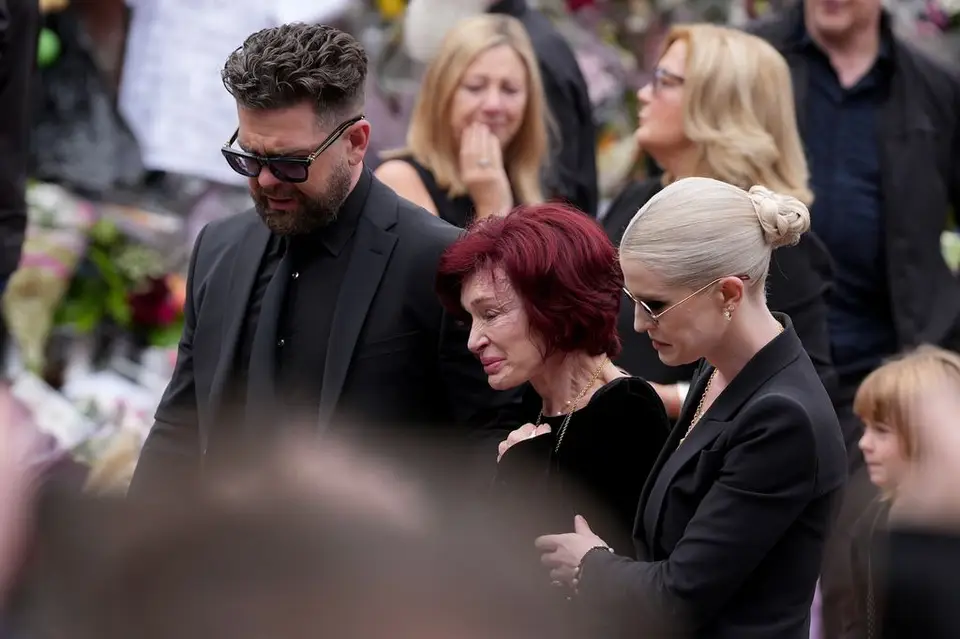
Ozzy Osbourne’s impact had always been larger than a single genre. He emerged from the industrial heart of Birmingham as the frontman of Black Sabbath, helping to define heavy metal as a form, and continued, decades later, as a reality‑TV figure whose fame reached new audiences who had never owned a Sabbath album. He died on July 22, 2025, at the age of 76. The family’s statement confirmed the loss with a quiet, devastating honesty: “It is with more sadness than mere words can convey that we have to report that our beloved Ozzy Osbourne has passed away this morning.”
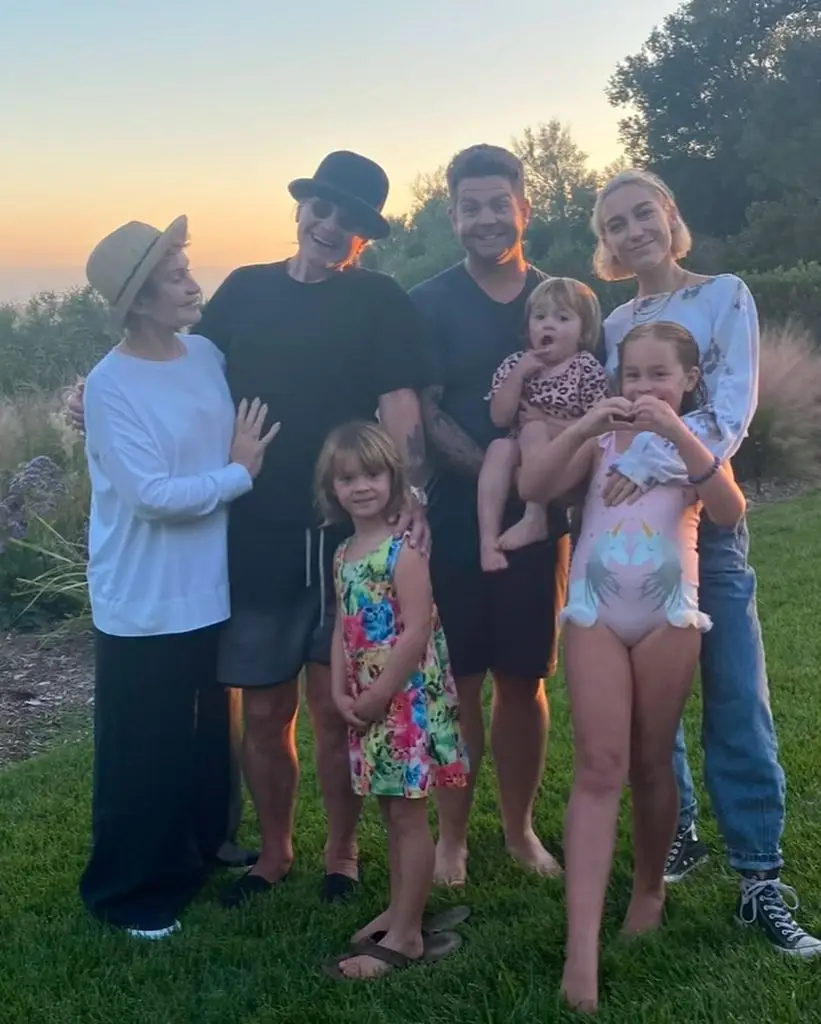
The loss reverberated beyond music. Sharon, the love of his life for 43 years, stood as both widow and the symbol of resilience. The couple’s children—Jack, Kelly, Aimee, Jessica, Louis, and Elliot—found their own ways to grieve, balancing personal sorrow with the public nature of their father’s fame. Some of them, like Jessica and Louis, shared by Sharon with his ex‑wife Thelma Riley, and Elliot, whom he adopted, carried the weight of extended family, loyalty, and memory.
The BRITs tribute wasn’t the only one. The 2026 Grammys, held earlier that year, had also paused to honor Ozzy, with Slash and Duff McKagan of Guns N’ Roses, Andrew Watt, Chad Smith of the Red Hot Chili Peppers, and Post Malone tearing through Black Sabbath’s “War Pigs.” The Osbourne family had watched the performance from the audience, visible in tears, the thunder of guitars matched by the quiet tumult of emotion.
In the end, the BRITs’ moment—Robbie Williams’ voice threaded through a reimagined “No More Tears,” Sharon’s trembling speech, Kelly’s brave smile—became more than a tribute. It became a reminder of how music, and the artists who make it, weave themselves into the fabric of our lives. Ozzy’s voice, his presence, and the legacy he built out of heavy riffs and raw honesty are now part of that fabric, carried forward not just by awards or headlines, but by the people who still turn to his songs when life feels like noise without meaning.
And in that sense, the most fitting line of the night might still be Sharon’s hopeful, almost gentle, closing thought: “If Ozzy was here tonight… he’d be showing that gorgeous smile.” The smile might be gone, but the music, the memory, and the echo of that voice aren’t. They’re still roaring, louder than ever.