Kelly Osbourne didn’t set out to make a statement. She was just scrolling through comments like anyone else—tap, swipe, tap—until she hit a line that stopped her breath. A stranger had described her as “tooooo thin and fragile” and compared her appearance to that of a “dead body.” The accusation hung there, cruel and public, posted under a photo from her recent outing in London. For a moment, she let the sting settle in. Then she opened Instagram Stories and hit back.
“Literally can’t believe how disgusting some human beings truly are!” she wrote, the words sharp but raw. “No one deserves this sort of abuse.”
It wasn’t just a per‑functum clapback. It was a quiet admission that the comments had hit harder than she wanted to admit. In another Story, she added, “This too shall pass, but like, holy f—.” Her tone mixed disbelief with a flicker of dark humor, the kind of catchphrase only someone who’s been through the wringer can pull off. It was a small, honest confession: the remarks had cut deep, but she wasn’t going to let them define her.
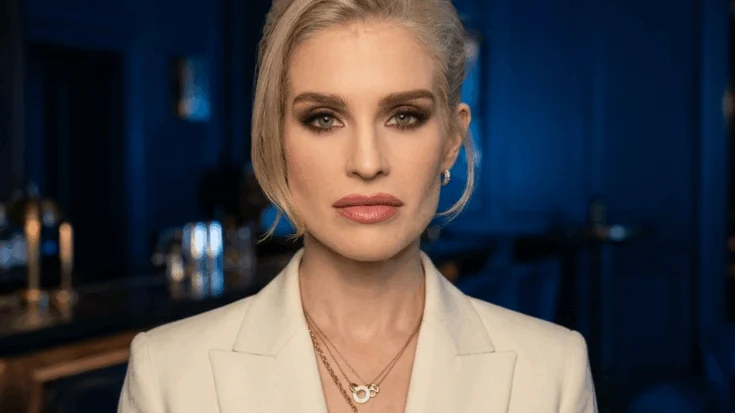
The backlash came on the heels of a simple, otherwise celebratory night out. The day before, Kelly had attended the Royal Ascot Millinery Collective Spring/Summer 2026 presentation in London, an elegant event that offered her a chance to step into the spotlight as a fashion icon rather than a reality‑TV star. After the event, she shared photos from the night on her Instagram, smiles, sequins, and a hint of old‑school glamour shimmering through the frame. Many fans responded with warmth, calling her “strong,” “iconic,” “beautiful just as you are.”
But then came the other side.
Beneath the compliments, the comments shifted. People began dissecting her body, her weight, the way her collarbones stood out in the light. They treated her grief like a glitch, something she should have already moved past. The tone was cold, clinical, sometimes almost gleeful: “You look like a dead body,” “Too thin and fragile,” “You’re sick and need help.” Every jab carved a tiny hole in the armor a public figure like Kelly builds over years of being scrutinized for her size, her looks, her past, and now, her sorrow.
This wasn’t the first time she’d found herself in this kind of crossfire. In December, after the death of her father, rock legend Ozzy Osbourne, Kelly had already used Instagram to address what she described as “disgusting, horrible, mean, rude comments” flooding in from online strangers. The video she shared then was raw, the kind of posting that feels less like content and more like a late‑night confession.
“What do you expect from me?” she asked the camera, her voice steadier than the situation around her probably felt. “What do you expect me to look like right now?” The question wasn’t rhetorical; it cut to the core of the issue. To the outside world, Kelly Osbourne might be a face on a TV screen, a name in tabloids, the daughter of a rock god. But behind the lenses and the filters, she was trying to get out of bed, face the weight of loss, and keep moving forward without falling apart.
She went on to explain that she wasn’t just grieving. Her life, she said, was “completely flipped upside down,” and she was also grappling with health issues during that time. “For example, you say that I look ill,” she said. “Well, I am ill right now.” The admission didn’t come across as a plea for pity—it came across as a plea for understanding. The idea that she should bounce back instantly, that she should resume looking polished and unaffected while the world around her felt like quicksand, was a fantasy that no one in her situation could live up to.
Kelly has long been open about the aspects of her life that matter most to her. She’s talked about her struggles with body image, the pressures of growing up in the spotlight, the chaos of fame, and the quiet chaos of everyday life behind the scenes. But this time, the criticism wasn’t just commentary; it was a kind of public shaming layered over private grief. The comments weren’t constructive, they weren’t kind, and they weren’t “honest reactions.” They were, in her words, “helping nobody.”
What made this moment especially striking to fans was that it echoed a broader conversation that music and culture have been having for years: the line between public figure and private person, the way grief and health struggles are treated like content, the strange assumption that visibility grants permission to hurt. For those who’ve watched Ozzy’s music shape the soundtrack of their lives, seeing his daughter vulnerable in the same arena feels like a mirror reflecting the way fans can sometimes turn on the very people they claim to love.
Kelly’s response, in that context, carries the weight of a small but powerful act. She’s not just defending her looks; she’s defending the right to exist as a human being in the wake of loss, illness, and the constant glare of the camera. The words “What do you expect from me?” aren’t just about her appearance—they’re about the way the world watches, judges, and forgets the quiet, invisible battles that happen behind the captions.
In the end, the screenshots and the stories will fade from individual feeds, but the moment itself will linger for those who recognize it for what it is: a public figure drawing a quiet but firm line. Not just against the cruelty, but against the expectation that strength means looking untouched by pain. Kelly Osbourne may be walking through one of the hardest chapters of her life, but she’s doing it on her own terms, with her voice, and with a clear message that no one’s image, especially while grieving, should be turned into a sport played by strangers on the internet.