Long before the music begins, there is already something unforgettable about the image.
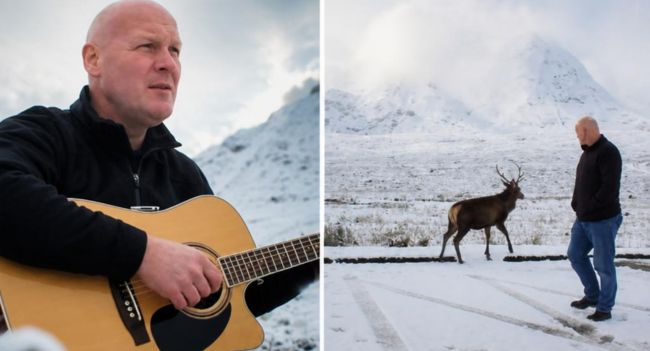
George Donaldson stands alone in the snowy Scottish Highlands, a guitar resting in his hands while cold air drifts across the mountains around him. There are no arena lights flashing overhead. No packed venue waiting to erupt into applause. No dramatic production designed to heighten the emotion of the moment.
Just snow. Silence. And a singer standing in a place where history still feels painfully close.
The mountains surrounding Glencoe stretch quietly behind him, covered in white beneath a gray Highland sky. Snow falls softly across the landscape while the wind moves through the valley with a stillness that feels heavy rather than empty. It is the kind of silence that seems to carry memory inside it—memory of names, loss, betrayal, and stories Scotland has never completely forgotten.
Then George Donaldson begins to sing.
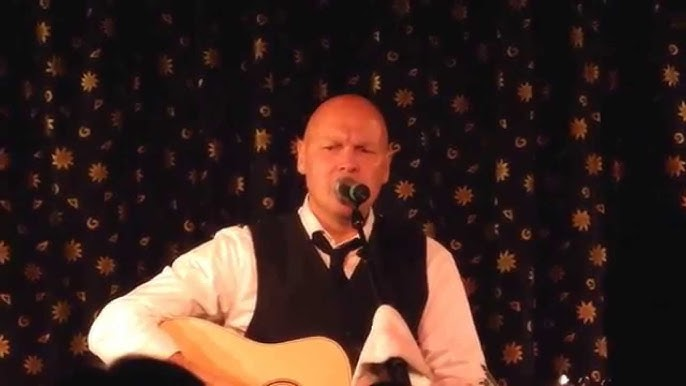
From the first lyric of “The Massacre of Glencoe,” it becomes clear this is not the kind of performance built around vocal showmanship or theatrical drama. The song asks for something far more difficult than technical perfection. It asks for understanding.
“The Massacre of Glencoe” carries the weight of one of Scotland’s most painful historical tragedies. The story reaches back to 1692, when members of the Clan MacDonald were killed after offering hospitality to government soldiers in Glencoe. Over the centuries, the event became more than history alone. It became part of Scotland’s emotional landscape—a symbol of betrayal, grief, loyalty, and remembrance passed through generations in stories and song.
Standing there in the falling snow, George Donaldson seems to understand exactly what the song requires.
He never over-sings the lyrics or forces emotion into the performance. Instead, he delivers each line with quiet restraint, allowing the sorrow already living inside the song to speak for itself. His voice sounds steady, weathered, and deeply human, as though he is carrying something fragile that cannot be handled carelessly.
That is what makes the performance so affecting.
It is not dramatic in an obvious way. There are no huge crescendos demanding attention. No grand gestures reaching for applause. The emotion arrives more quietly than that. It settles in slowly, through the calmness of George Donaldson’s delivery and the honesty in the way he approaches every word.
Some songs exist to entertain. Others exist because memory refuses to disappear.
“The Massacre of Glencoe” belongs to the second kind.
As George Donaldson sings, the Highlands no longer feel like a backdrop to a music video or performance clip. The landscape itself becomes part of the story. The snow-covered mountains, the cold wind, and the vast silence around him all seem connected to the song in a way that feels almost inseparable.
The setting gives the performance a haunting sense of authenticity. George Donaldson is not simply singing about Glencoe while standing on a stage somewhere far away. He is standing inside the place where the memory still lives.
The snow continues to fall steadily as his breath rises in the cold air. His guitar stays close against him, simple and unadorned. Nothing about the moment feels polished or manufactured. And because of that simplicity, every detail feels more real.
George Donaldson sings with the calm strength of someone who understands how to carry sadness without allowing it to overwhelm the song itself. Every pause feels intentional. Every note feels patient. At times, he appears less like a performer and more like someone listening closely to the story as he tells it.
That may be why so many people continue returning to the performance years later.
It does not feel trapped in the past like an old concert recording. Instead, it feels strangely present, as though the emotion inside it never fully faded.
What makes the performance even more difficult to watch now is the knowledge of what came afterward.
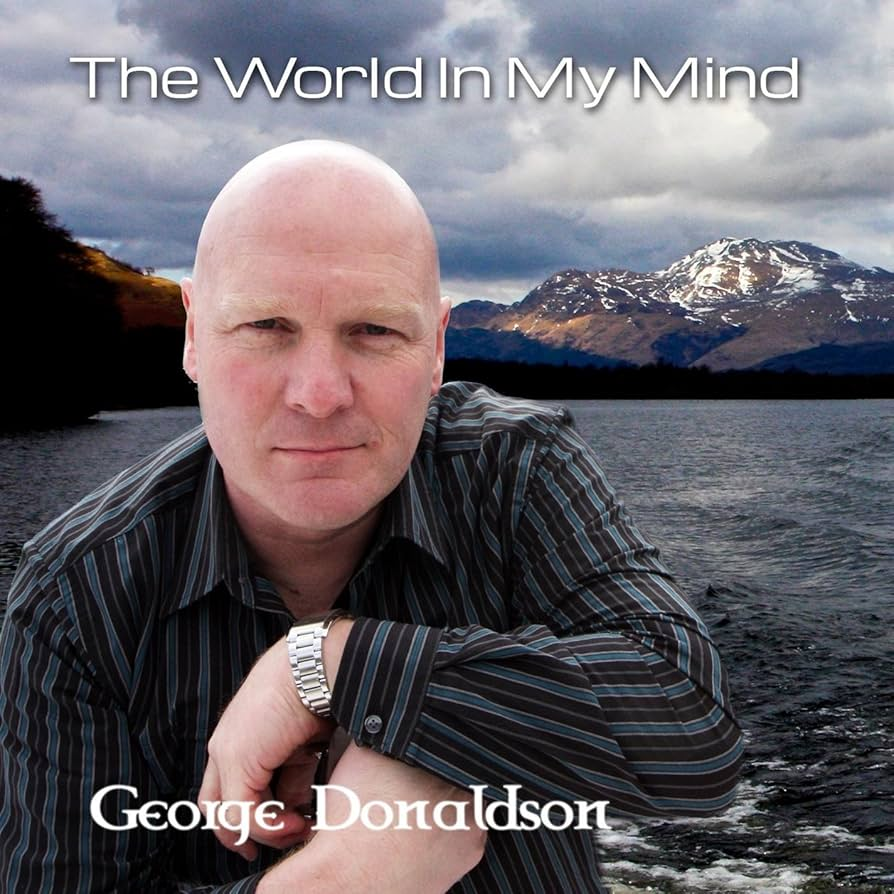
In March 2014, Celtic Thunder fans around the world were shocked by the sudden loss of George Donaldson. He passed away at only 46 years old, leaving behind not only fellow musicians and devoted audiences, but also his family, including his wife and daughter Sarah, whom he often described with enormous love and pride.
For many fans, George Donaldson had always represented warmth and steadiness within Celtic Thunder. His voice carried a natural sincerity that made even the quietest performances feel personal. When he was gone, listeners found themselves returning to old recordings not simply to revisit songs, but to hear that familiar voice again.
And among all those performances, “The Massacre of Glencoe” began to feel even more emotional with time.
There is a moment near the end of the song when everything seems to grow quieter. George Donaldson holds the final lines with the same gentle steadiness that carried the performance from the beginning. Around him, the wind continues moving through the Highlands while the snow falls without interruption.
The landscape itself seems to pause and listen.
It becomes easy to understand why so many fans describe the performance as haunting. Not because it feels ghostly in a theatrical sense, but because it carries the strange emotional weight that certain songs and voices gain after loss. Watching it now, many listeners feel as though George Donaldson still belongs to that place somehow—as though his voice remains woven into the mountains, the silence, and the history he sang about so carefully.
Maybe that feeling comes from grief. Maybe it comes from the way music preserves people long after they are gone. Or maybe some performers become so deeply connected to certain songs that separating the voice from the story becomes impossible.
More than ten years have passed since George Donaldson’s voice left the world too soon. Yet when “The Massacre of Glencoe” begins in that snowy Highland setting, time suddenly feels much smaller.
The years seem to disappear.
George Donaldson stands there once again, guitar in hand while snow drifts through the air around him. Glencoe waits in silence. The song carries across the mountains.
And somewhere between history, memory, and music, George Donaldson is still being heard.